


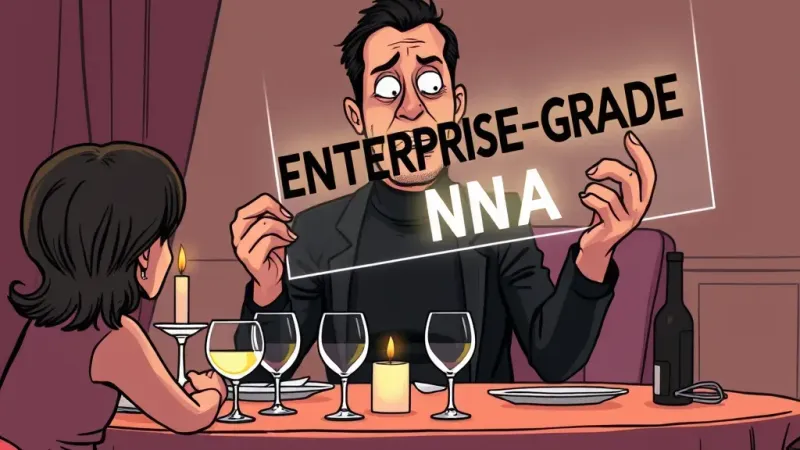
Menlo Park divorce attorneys report a massive influx of tech executives demanding biometric locks, multi-factor authentication, and strict non-disclosure agreements for anyone granted physical access to their personal lives. The sudden domestic panic follows last month’s catastrophic executive meltdown where a high-profile semiconductor titan allegedly compromised corporate valuation metrics and state-adjacent trade secrets over a lukewarm cup of artisanal matcha with a suspected foreign intelligence asset who claimed to be deeply interested in his thoughts on zero-latency server architecture.
For the last two decades, these visionaries operated under the dangerously naive assumption that romance was an open-source protocol built on mutual trust. Now they realize their spouses and casual dating partners are essentially unsecured endpoints sitting on a home network, waiting to leak quarterly earnings data to the Wall Street Journal or, worse, their therapist.
"For years, these guys treated their marriages like a GarageBand project they could just abandon when things got complicated," said Brad Sterling, senior partner at Sterling, Vane & Associates. "Now they realize their feelings are a vector for shareholder lawsuits. We are currently drafting prenups that read like a Department of Defense procurement contract. If you look at his phone while he is sleeping to see who 'Jessica from product' is, that is an immediate Tier-1 intellectual property violation resulting in total forfeiture of alimony and your share of the Tesla stock."
These new domestic packages, heavily promoted at recent exclusive retreats in Davos and Aspen, introduce tiered clearance levels for all romantic partners. Tier-3 partners are permitted to attend company galas and hold hands in public, provided they have completed a background check through a private intelligence firm and agree to binding arbitration in the event of an unexpected emotional breakdown. Tier-2 partners gain access to the master bathroom, but are legally barred from asking about the founder's mood swings or why he keeps three separate burner phones in the glove compartment.
Tier-1 partners, reserved strictly for legally wedded spouses of at least five years with flawless compliance records, are granted limited viewing access to the executive's personal calendar, though direct questions about travel itineraries or sudden weekend trips to international tax havens remain strictly prohibited under clause 14-B of the master agreement.
Corporate governance experts point out that the rush to legally fortress the bedroom is long overdue. For too long, billionaires have left their most vulnerable asset—their fragile, easily manipulated ego—entirely unprotected by cryptographic protocols or legal deterrents.
"When a chief executive falls for a honeypot operating out of a local boutique fitness studio, the entire market capitalization suffers," said venture capitalist Marcus Thorne. "We need zero-trust domesticity. If a romantic partner cannot pass a quarterly polygraph test regarding their genuine enthusiasm for continuous integration pipelines, they have no business being within five hundred yards of a Silicon Valley waterfront estate."
Furthermore, the updated agreements include strict financial penalties for emotional leakage. Any partner caught expressing genuine human empathy, complaining about sixty-hour work weeks, or asking about work-life balance during a board-level crisis faces immediate asset forfeiture and the instant revocation of their black-card Amex. Legal teams are also advising clients to install facial recognition turnstiles on all master bedrooms to prevent unauthorized cuddling during market downturns.
As the tech sector braces for further inevitable scandals involving middle-aged founders and twenty-something optimization coaches, lawyers are already developing smart contracts that automatically file for contested divorce the exact microsecond a spouse sighs heavily during a late-night earnings call. Because in modern late-stage capitalism, true love is just an unhedged liability waiting for an auditor to notice.