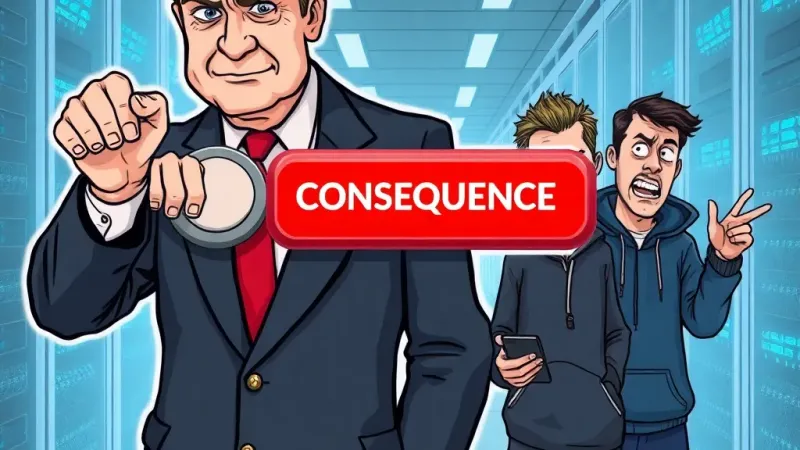
LONDON – In a bold move signaling a newfound understanding of the internet, the United Kingdom's Parliament has finalized legislation that could send technology company executives to prison for failing to remove non-consensual intimate images. The landmark decision, which passed with bipartisan support, positions Britain at the forefront of countries asserting that people in charge of massive global platforms might, in fact, be responsible for what happens on them.
Sources close to the legislative process described a palpable sense of triumph within Westminster, with several MPs reportedly exclaiming, "We found the button!" upon the bill’s passage. "For too long, these digital behemoths have operated as if outside the reach of common law, allowing nefarious content to proliferate like digital weeds," stated Lord Archibald Finch-Hatton, Secretary for Digital Fortitude and Online Integrity, in an exclusive briefing. "Our new legal framework makes it unequivocally clear: if you host it, you're toast, especially if it's photos your mate didn’t want shared. This is a robust, proactive measure targeting the very top of the silicon pyramid, ensuring accountability where it truly matters." He added that the government was now exploring similar legislation for "those annoying pop-up ads" and "websites that autoplay sound."
Across the Atlantic, reactions from Silicon Valley ranged from bewildered indignation to frantic reevaluation of corporate jet schedules. "We are deeply concerned by the UK’s regressive stance on executive freedom," commented Ms. Blythe Kensington, Chief Legal Innovator at Veridian Global Tech. "Our business model fundamentally relies on plausible deniability and the assumption that national borders are mere suggestions. This sets a dangerous precedent where a CEO could face actual incarceration for something an algorithm missed or a user uploaded from a VPN in a jurisdiction we’ve never even heard of. Frankly, it feels rather analog." Sources indicate several major platforms are already revising their Terms of Service to include a clause granting companies "full and irrevocable rights to all user-generated intimate imagery" to circumvent potential liability.
Critics, primarily human rights advocates who have spent the last two decades demanding such protections, cautiously welcomed the legislation. However, they questioned why it took the combined forces of parliamentary debate, a national campaign, and at least three major celebrity photo leaks to prompt action. "It’s fantastic that the UK government is finally treating online safety with the gravity it deserves," remarked Dr. Lena Sharma, director of the Digital Dignity Institute. "Though one might wonder if they simply got bored of waiting for the tech companies to self-regulate, or if someone in power finally had a relative whose private content went public. Often, that's the real legislative catalyst."
Meanwhile, tech executives are reportedly consulting with offshore lawyers and designing new "ethical compliance algorithms" that predominantly identify and remove images of their own children.