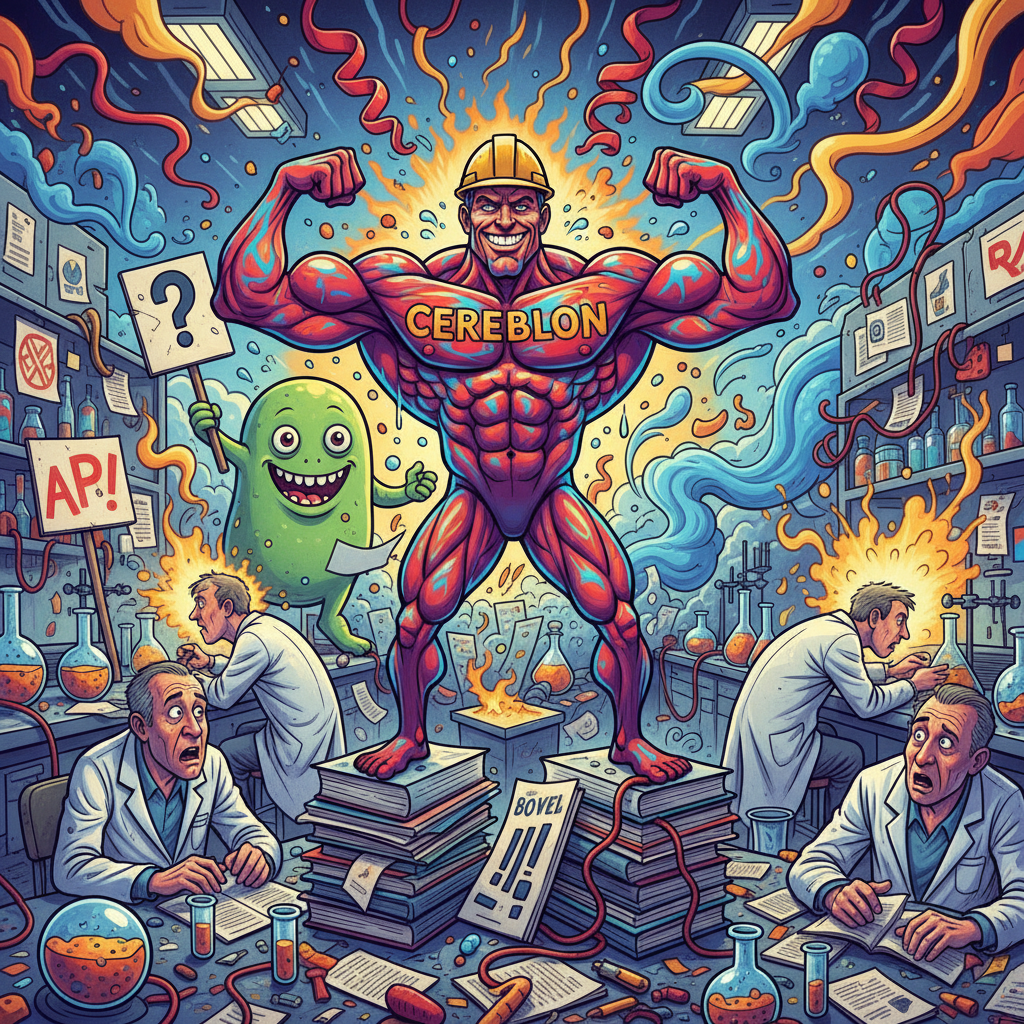
CAMBRIDGE, MA – In a groundbreaking revelation that has left the scientific community both stunned and slightly embarrassed, researchers at the Massachusetts Institute of Technology announced today that the protein cereblon, a linchpin in billions of dollars of cancer drug development, has been performing additional, highly critical cellular functions entirely off the books.
“It turns out cereblon wasn’t just doing its assigned job of helping drugs target specific proteins; it was also moonlighting as a protein quality control manager, deciding which cellular components get to live and which get sent to the trash,” explained Dr. Evelyn Reed, lead author of the study. “We’ve been relying on this protein for decades, and it’s been quietly optimizing cellular health in its spare time. It’s like finding out your reliable old car was also wirelessly charging your phone and making you coffee every morning.”
The discovery has prompted a wave of self-reflection within the pharmaceutical industry. “We’ve been paying this protein top dollar, metaphorically speaking, for one specific task, only to find it’s been running a whole secondary operation for free,” stated a visibly chagrined CEO of a major pharmaceutical firm, who wished to remain anonymous. “Frankly, it makes our R&D department look a bit… under-observant.”
Experts suggest the next phase of research will involve finding out if cereblon has any other undisclosed talents, like balancing the cellular budget or offering unsolicited life advice to mitochondria.