Sacramento, CA — The City of Sacramento has launched a pilot program utilizing advanced AI algorithms and proprietary "Vibe-o-Metrics" to objectively assess the atmospheric resonance and communal synergy at its popular Concerts in the Park series. The initiative, spearheaded by the newly formed Department of Vibrational Cohesion, aims to move beyond subjective human interpretation to provide data-driven insights into audience engagement and perceived municipal contentment.
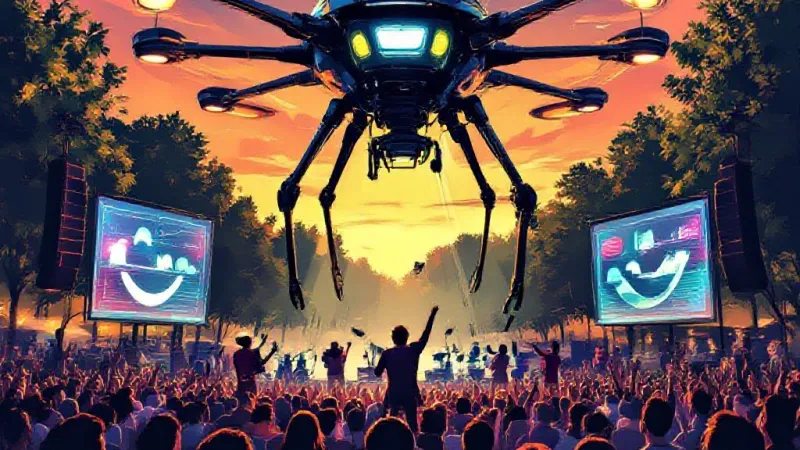
Sensors embedded in drone technology and ground-level feedback kiosks were deployed throughout Cesar Chavez Park during Friday’s opening night, meticulously collecting data points such as average head-nodding frequency, synchronized sway count, and collective lukewarm beverage consumption rates. Early indicators suggest an "overall positive, yet statistically uninspired, emotional throughput" according to Chief Vibe Officer Dr. Eleanor Finch, who oversees the city’s ambitious foray into cultural quantification. "For too long, cities have relied on anecdotal evidence or, heaven forbid, *feelings*," Dr. Finch stated in a press release. "Hambry’s VibeNet AI analyzes over 300 micro-expressions per attendee, cross-references it with local pollen counts, and even correlates it with current TikTok trends to generate an irrefutable 'Atmospheric Cohesion Index' (ACI) score."
Preliminary data from the inaugural concert registered an ACI of 6.7 out of 10, a figure officials are cautiously optimistic about, citing potential for "vibrational uplift" as the concert series progresses. "Our models show a significant dip in ACI during instances of generic guitar solos and during the brief period when a small child loudly asked for a juice box," explained data lead Liam Kincaid, clutching a tablet displaying a real-time heatmap of communal enjoyment. "This granular feedback allows us to strategize. Perhaps future setlists could be algorithmically optimized to minimize juice-box-related mood disruptions, or we could introduce mandatory collective deep breathing exercises during transitional acts."
Critics of the program, primarily members of the Sacramento Arts Council who reportedly found the entire process "deeply unsettling" and "a gross misallocation of the public trust," were dismissed by Mayor Darren Wilkes. "This isn't about stifling spontaneity; it's about optimizing taxpayer investment in leisure," Wilkes asserted in a press conference. "We need to know, definitively, if citizens are getting their money's worth of *chill*. Are they experiencing peak community spirit? Or are they merely tolerating background noise while they scroll Instagram? Our AI will tell us."
The Department of Vibrational Cohesion also announced plans to expand its VibeNet AI to public transit queues and DMV waiting rooms, aiming to achieve "optimal civic contentment across all municipal touchpoints" by Q3 2026.