
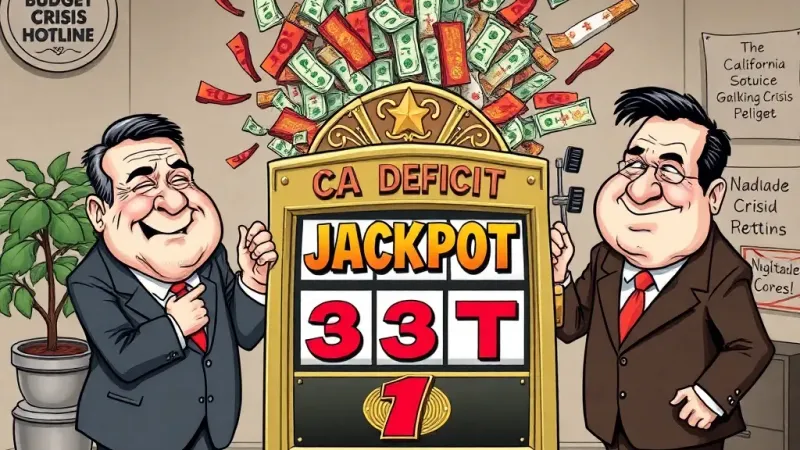
SACRAMENTO — California budget analysts and lawmakers are reportedly embracing the state’s perennial fiscal challenges, with many now viewing the annual multi-billion dollar deficit projections and subsequent May Revision scramble as a cherished yearly tradition. Sources close to the process confirm a palpable buzz in state offices as the deadline approaches for the latest batch of "unexpected" financial figures.
"It’s like Groundhog Day, but instead of a shadow, we're looking for a projected shortfall of $20 to $70 billion," stated Dr. Kendra Thorne, a senior fellow at the independent think tank, Fiscal Reality Checkers (FRC). "Every year, it's the same delightful drama: the initial gasp, the urgent committee meetings, the inevitable discovery that 'the math' has once again conspired against our best intentions. Honestly, the suspense of not knowing the exact figure until the last minute is half the fun."
This year’s projected deficit, currently hovering around the mid-tens of billions, has reportedly sparked friendly wagers among legislative aides on whether it will exceed last year’s "disappointing" $30 billion hole. "It's a way to keep things interesting," admitted one anonymous legislative insider, polishing a commemorative "I Survived the 2023 Budget Scramble" coffee mug. "If the numbers were always predictable, where would the thrill be? We’d have to invent new ways to underfund critical services, and frankly, that's just too much work. We already do that anyway."
To manage the escalating excitement, the Governor's Office of Fiscal Fluctuation (GOFF) has reportedly launched an internal "Budget Bingo" game, with squares like "Unexpected Revenue Dip," "Public Sector Union Outcry," and "Blame Tech Sector Slowdown." The first team to yell "Budget!" after ticking off a full row wins a certificate redeemable for two hours of uninterrupted quiet time in the Capitol's seldom-used meditation room. This initiative aims to foster camaraderie and a sense of shared purpose, even if that purpose is perpetually facing a fiscal cliff.
"It’s crucial to maintain morale during these financially dynamic times," explained Penelope Crest, the newly appointed Chief Uncertainty Officer for the Department of 2. "Our staff works tirelessly to project these incredibly fluid figures, often under the immense pressure of knowing that next year, we'll probably have to revise them all again. We even have a dedicated 'Re-Forecasting Unit' whose sole job is to prepare for the *next* round of revisions immediately after the current ones are finalized." She added that the state is considering a "Fiscal Foresight Futures Market" to allow residents to bet on the final deficit number, "democratizing the uncertainty and giving everyone a stake in our fiscal fate, for a small processing fee, of course."
Officials anticipate the May Revision will feature the usual array of "tough choices," "prudent adjustments," and "painful but necessary cuts" to programs that, coincidentally, always seem to resurface in subsequent budget cycles. The state's Department of Public Messaging has already drafted several variations of press releases using phrases such as "navigating fiscal headwinds," "right-sizing our commitments," and "strategically re-prioritizing taxpayer investments" to ensure a fresh linguistic approach to the same old problem. They've also prepped a series of infographics explaining why a multi-billion dollar deficit is actually a sign of "robust economic adaptability."
The only real uncertainty, say seasoned Sacramento observers, is which essential service will be creatively repackaged as "non-essential" until next year's budget cycle.