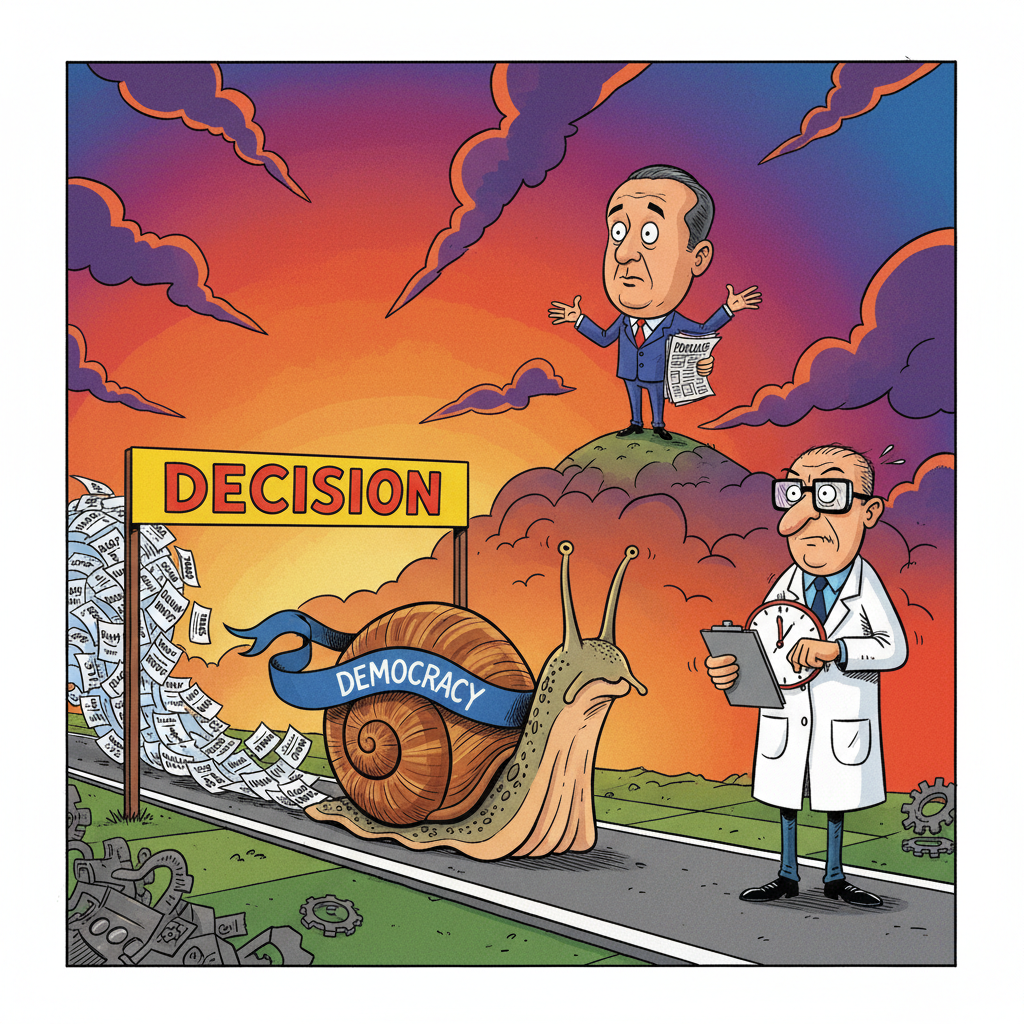
WASHINGTON D.C. — A new report from the Institute for Electoral Efficiency (IEE) has lauded runoff elections as the pinnacle of political procrastination, effectively delaying final decisions and extending campaign cycles for the sheer thrill of it. The study, released Monday, highlights the unique ability of runoff systems to transform a single, decisive vote into an agonizing multi-stage process.
“Why settle for one election when you can have two, or even three?” stated Dr. Evelyn Thorne, lead researcher at the IEE. “Our data conclusively shows that the optimal way to engage voters is to make them vote, then wait, then vote again, thereby ensuring maximum fatigue and minimal clarity. It’s a masterclass in democratic tension building.”
The report specifically praised the upcoming May CD 33 runoff election, citing it as a prime example of the system working as intended: keeping candidates campaigning, donors donating, and the public vaguely aware for an extended period. “The beauty is in the prolonged agony,” added Thorne. “It’s like a political cliffhanger, but instead of a new episode, you get another month of attack ads.”
Campaign strategists reportedly welcomed the findings, noting that runoffs provide invaluable extra time to refine messaging, pivot on key issues, and desperately search for new angles to differentiate candidates who often hold nearly identical positions. “It’s not about winning; it’s about not losing, yet,” explained veteran political consultant Marcus 'The Maestro' Thorne, no relation. “Every extra week is another opportunity to convince people that the other guy is slightly worse.”
The IEE concluded its report by recommending that all future elections consider adopting a multi-stage runoff system, ideally with a mandatory 'cooling-off' period where no campaigning is allowed, just to really let the existential dread set in.