
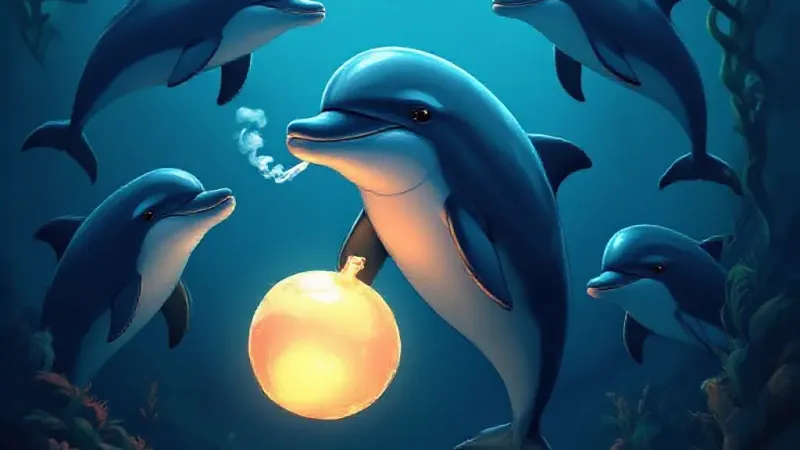
MARINE BIOLOGY LAB, OCEANSIDE, CA – A groundbreaking new study published by the Institute for Aquatic Psychology (IAP) has definitively concluded that bottlenose dolphins are not "playing" with pufferfish; they are, in fact, getting absolutely blazed off the neurotoxins and spending their afternoons blissfully numb. The findings debunk decades of anthropomorphic interpretations of marine animal behavior, revealing a species less interested in synchronized swimming and more in chasing the next big buzz.
"For years, we told ourselves they were 'engaging in complex social play' or 'learning object manipulation skills' when they were just repeatedly nudging a potentially lethal marine organism," admitted Dr. Brenda Finch, lead researcher at IAP, adjusting her spectacles. "But then you watch the high-definition footage, and one dolphin is clearly holding a pufferfish to its blowhole like a bong, then passing it to its buddy with a dreamy, vacant look in its eyes, saying absolutely nothing. We’re not studying play; we're documenting an oceanic drug ring with astonishing clarity." Dr. Finch further elaborated that previous "mating rituals" might just have been dolphins trying to score a contact high.
The research team, utilizing advanced submersible drones, observed pods strategically herding pufferfish, then gently manipulating them until they released their tetrodotoxin, a potent neurotoxin that, in small, carefully titrated doses, produces a narcotic-like effect. The dolphins then share the fish, often passing it around like a communal joint, before drifting into a state of hypnotic trance, sometimes floating belly-up for extended periods, seemingly contemplating the vastness of the ocean or the taste of plankton. "One time," recounted a visibly weary research assistant, "a dolphin attempted to use sonar to hail a taxi. It was clearly having a bad trip, or perhaps just a profoundly spiritual experience."
Scientists are now re-evaluating numerous "mysterious" mass strandings, suggesting they might not be navigational errors but rather collective hangovers or failed attempts to find a dealer after a particularly dry spell in the reef. Dr. Finch concluded with a sigh, "It turns out dolphins aren't these pure, majestic creatures we've idealized. They're just like us, struggling with the crushing weight of existence and the relentless pursuit of sustenance, trying to escape reality one toxic blowfish at a time. Frankly, after seeing what they see in the ocean every day, I completely get it." The IAP is reportedly seeking grants for a "Dolphin Narcan" program.
A follow-up study is already underway to determine if sea lions are using kelp for its mild hallucinogenic properties, or if they just really enjoy the crunch and looking vaguely disappointed.