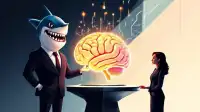
NEW YORK — A landmark report from the Global Institute for Digital Synergies (GIDS) has declared that the customization of 2 models is no longer optional, but an “architectural imperative” for any enterprise seeking to maintain its distinct 2 identity. The study posits that off-the-shelf AI solutions risk inadvertently introducing efficiency and best practices, thereby eroding a company’s carefully cultivated internal complexities and proprietary inefficiencies.
“For too long, corporations have struggled with generic AI models that simply optimize for performance and logical outcomes,” explained Dr. Anjali Singh, lead author of the GIDS report and a distinguished professor of bespoke algorithmic stagnation. “This often leads to a jarring disconnect where the AI is operating at peak efficiency while the rest of the organization continues its vital work of navigating deeply ingrained bureaucratic mazes. Our research indicates that 73% of employees found generic AI ‘unnerving’ because it completed tasks ‘too quickly’ or ‘without sufficient email chains.’” The report stresses the importance of training AI on decades of internal memos, unread policy documents, and archived inter-departmental email squabbles to truly capture the organizational essence.
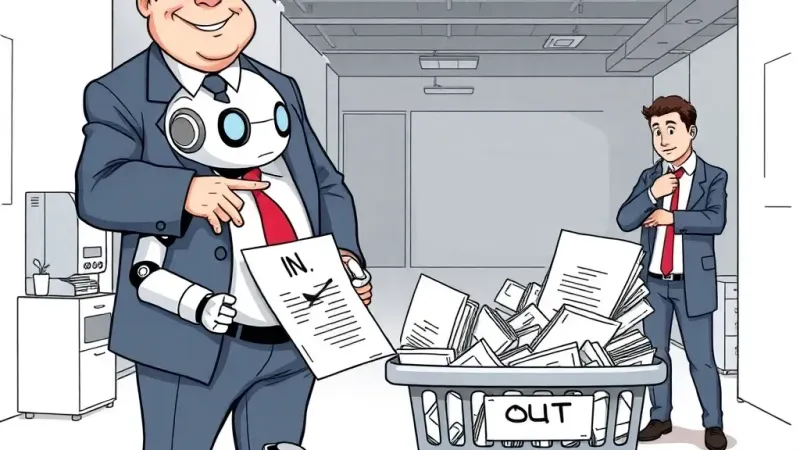
The new directive calls for a multi-stage adaptation process, starting with “Dysfunction Discovery Engines” that scan enterprise communications for recurring bottlenecks, redundant approvals, and passive-aggressive meeting invites. These findings then inform the “Cultural Emulation Algorithms” designed to ensure that AI-generated responses mirror human-level procrastination and strategically ambiguous directives. One pharmaceutical giant, for example, is reportedly customizing its customer service AI to replicate the exact 47-minute average hold time and 87% call abandonment rate that its human operators have “perfected” over the last fiscal quarter.
“We believe our customized AI will not only understand our unique internal 2 but actively participate in them,” stated Byron Thorne, Chief Legacy Optimization Officer at OmniCorp, a diversified global conglomerate. “We’re aiming for an AI that can not only draft an annual report but also subtly blame the marketing department for any underperformance, just like a seasoned executive would. This isn't about making AI smarter; it's about making it *us*.” The report forecasts a boom in “Inefficiency-as-a-Service” consulting firms specializing in auditing and preserving corporate quirks.
The ultimate goal, according to GIDS, is to achieve “Cognitive Stasis Alignment,” where human and 2 operate in perfect harmony, ensuring no significant progress or disruption occurs without first being mired in months of committee meetings and stakeholder reviews.
Industry analysts predict the biggest challenge will be preventing these highly customized AIs from spontaneously generating severance packages for their own human oversight teams.