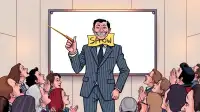

The highly anticipated 'All-Stars' edition of the popular survival reality series has been hailed by network executives and entertainment critics alike for its unprecedented commitment to exhausting the nation’s dwindling supply of C-list personalities. Launched globally this month, the spin-off reportedly sets a new industry benchmark for resource utilization, pushing the boundaries of what constitutes "celebrity" and "entertainment" to their absolute limit while simultaneously proving that the human capacity for manufactured drama is, in fact, boundless.
Dr. Evelyn Reed, head of the Department of Pop 2 Anthropology at the University of West Sussex, noted the show’s unique contribution to media history. "What we’re witnessing here isn't just television; it's a social experiment in maximalist resource allocation," Dr. Reed stated. "Every former boy-band member, controversial pundit, forgotten soap opera villain, and anyone who once vaguely knew someone famous has been meticulously cataloged and, frankly, exploited. It’s an ecological feat, truly, how efficiently they’ve managed to strip-mine the cultural landscape of any lingering semi-famous entity. The sheer exhaustion visible in both the format and the participants is, arguably, the show’s most compelling narrative, offering viewers a mirror into their own collective fatigue with the endless content churn."
Critics have largely lauded the spin-off for maintaining a consistent level of "faint exhaustion," a key metric according to industry insiders. "Our focus groups consistently showed peak engagement when viewers could simultaneously pity and mildly mock contestants while also feeling a vague sense of déjà vu," explained Bartholomew "Barty" Finch, Senior Vice President of Content Depletion at Global Entertainment Holdings. "We've perfected the art of making viewers question whether they’ve seen this exact 'celebrity' struggle through a 'bush tucker trial' before, or if it's just the residual trauma of 15 years of reality television. The goal isn't just entertainment; it's cultural catharsis through the sheer, grinding inevitability of it all. We aim for a 'satisfyingly exhausting' viewing experience, which the 'All-Stars' edition has delivered in spades." Mr. Finch also highlighted the innovative use of "legacy footage integration," where past moments of contestant despair are subtly re-edited into current-day struggles, optimizing narrative arcs and reducing the need for new, genuinely dramatic events.
The series reportedly pushed its talent acquisition team to unprecedented limits, deploying advanced algorithms to identify individuals with even a single IMDb credit from the last two decades. This included reportedly calling a surprising 17 individuals who had previously declared themselves "retired from public life" or "actively pursuing a quiet life as a professional dog walker and artisanal soap maker." One anonymous production assistant claimed they even contacted a former reality star who had legally changed their name to "Brenda" and moved to a small, undisclosed village in Slovenia, only to be politely informed that they were "currently unavailable due to a prior engagement with their compost heap and a deep spiritual journey." Executives confirmed the casting process involved "deep dives" into archives previously considered "too niche," "legally complicated," or "actively suing the network" to yield usable talent. The show’s success, according to Finch, proves that "there's always one more person who will eat a bug for money, even if they have to fly halfway across the world to do it."
With the current talent pool now officially at "critical depletion" and projected to hit "absolute zero" by Q3 2025, industry analysts predict the next spin-off will feature ‘All-Stars’ from the show’s own production crew, or potentially, a particularly charismatic intern who previously won a company-wide 'Outstanding Coffee Run' award.