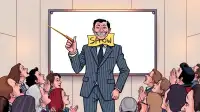

ST. LOUIS, MO — The burgeoning reality series "DTF St. Louis" is currently reaping unprecedented critical acclaim for its innovative use of "needle drops," a revolutionary production technique wherein pre-recorded, licensed music tracks are played over specific visual sequences to heighten emotional impact or underscore narrative beats. Industry experts are hailing the show's creative team for boldly integrating popular songs into its evolving storyline, a methodological approach previously considered either cost-prohibitive, conceptually too complex, or simply too obvious for mainstream television programming.
Brenda "Breezy" Peterson, the visionary showrunner for the Onyx Entertainment production, expressed profound pride in her team's "audacious yet surprisingly simple vision." "We started with a fundamental question: What if we, like, put a song over a montage?" Peterson explained in an exclusive industry keynote. "The networks initially pushed back, insisting it couldn't be done, or that audiences would find the combined audio-visual experience jarringly complex. But we pushed through. When a character is feeling sad, we play a sad song. When they're feeling celebratory, it’s a song about celebrating. It’s groundbreaking, really, and frankly, I'm still trying to grasp why no one thought of it with such clarity until now."
Critics have particularly singled out several key moments as indicative of this new artistic frontier. These include the second episode's highly praised use of Semisonic's "Closing Time" during a bar's last call, and the fourth episode's pairing of Lynyrd Skynyrd's "Sweet Home Alabama" as a cast member returns to their childhood home, evoking "a powerful sense of returning home." Dr. Thaddeus Finch, a distinguished cultural semiotics professor at the Institute for Advanced Sound Application, lauded these choices as "a masterclass in audio-visual synergy, a seamless fusion of sound and image that profoundly reshapes the viewer's emotional landscape." "To juxtapose a universally recognized track like that against footage of a man simply entering a building—it's utterly breathtaking," Dr. Finch commented in his recent treatise, *The Unspoken Art of Synchronized Playback*. "The sheer bravery required to source, license, and then simply *play* such an iconic piece of cultural heritage cannot be overstated in today's visually saturated media ecosystem.
Onyx Entertainment has reportedly secured an additional $12 million in its marketing budget, specifically earmarked to promote the show’s "revolutionary sonic tapestry." Cheryl Kensington, the network's newly appointed VP of Aural Brand Integration, stated that "DTF St. Louis" has unequivocally set a new benchmark for television production and audience engagement. "Our legal team worked tirelessly to ensure every single note heard in this program is properly cleared and attributed," Kensington revealed in a press conference that featured a 30-second silent montage. "It's an incredibly costly and intricate endeavor, but we firmly believe the future of television lies in this groundbreaking commitment to playing sound recordings during scenes." Other major studios are now rumored to be fast-tracking their own "music integration initiatives," with some even allegedly exploring the truly radical concept of placing ambient instrumentals underneath dialogue sequences for maximum impact.
The Academy of Television Arts & Sciences is reportedly considering a new Emmy category: "Outstanding Achievement in Not Muting The Soundtrack."