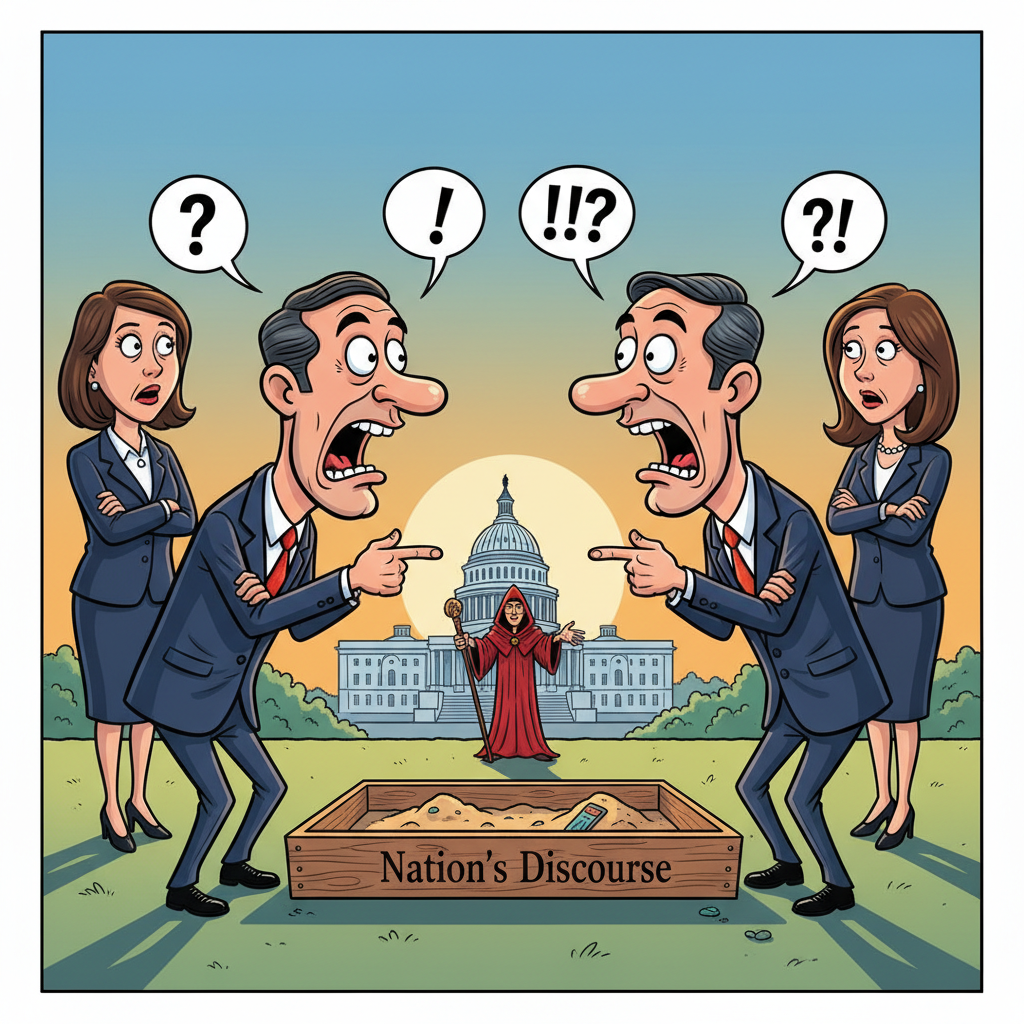
WASHINGTON D.C. – A new, comprehensive analysis of recent political rhetoric confirms that the nation's most influential figures continue to rely heavily on the sophisticated communication strategy known as 'I know you are but what am I?' The protocol, typically observed in schoolyards and during particularly contentious family dinners, has been elevated to a primary mode of public engagement among leading political families.
The latest data point emerged from a public dispute involving a former president and the spouse of a prominent governor, where accusations of intellectual deficiency were met with swift, equally pointed counter-accusations. Experts suggest this highly evolved form of discourse is crucial for maintaining the delicate balance of power in Washington.
“It’s a surprisingly effective strategy,” noted Dr. Eleanor Vance, a senior fellow at the Institute for Advanced Tautologies. “By immediately deflecting any criticism with an identical, albeit inverted, accusation, you create an impenetrable rhetorical shield. It's less about winning an argument and more about ensuring no one ever actually has to acknowledge a point.” Dr. Vance added that the involvement of spouses indicates a robust, all-hands-on-deck approach to maintaining this critical communication standard.
Sources close to various political camps indicate that advanced training in the 'I know you are but what am I?' protocol is now mandatory for all aspiring public servants and their immediate families. “You have to be quick, you have to be loud, and you have to have the conviction of someone who just found a really good stick,” explained one anonymous political strategist.
The findings suggest that as the nation navigates increasingly complex global challenges, its leaders remain steadfast in their commitment to a communication style proven effective since the invention of the sandbox.