
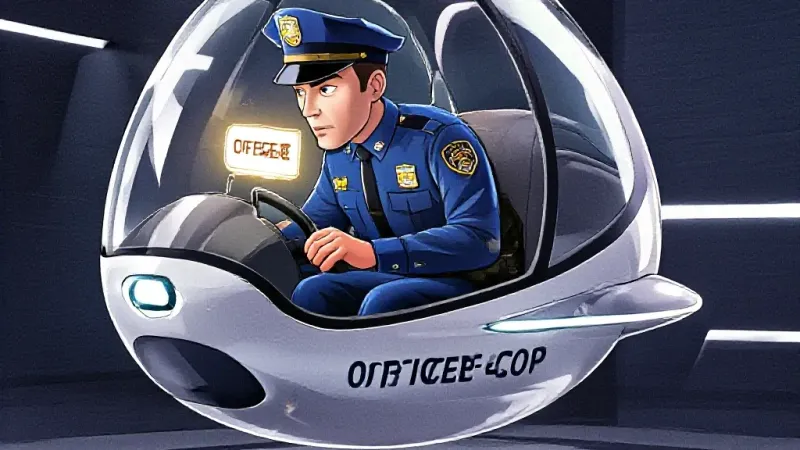
Sacramento, CA – In a bold new stride for law enforcement, police this week deployed a magnet-equipped drone to disarm a knife-wielding suspect, successfully eliminating the logistical and emotional burden of officers having to interact with the public. The suspect, 30-year-old Austin Carter, was cornered in his garage before the department's "Hover-Cop" unit remotely plucked his weapon, proving that every human interaction can now be handled by a machine, preserving officer wellness above all else.
"This isn't just about safety, it's about efficiency," stated Police Chief Reginald 'Reggie' Briggs from behind a reinforced ballistic glass partition during a virtual press conference. "Why risk a human officer's feelings, potential physical exertion, or the general unpleasantness of engaging with a citizen when a perfectly good drone can do the heavy lifting? Our officers can now focus on what truly matters: not being there." Chief Briggs noted the drone also eliminated the "messy paperwork" associated with direct confrontation, estimating a 15% reduction in "officer emotional distress forms."
The "Hover-Cop," developed by defense contractor Discreet Solutions, Inc., boasts a proprietary "magnetic apprehension" system capable of dislodging anything from a butter knife to a particularly stubborn protest sign. "We envision a future where all public interactions are mediated by algorithms and magnets," explained Discreet Solutions CEO, Skip 'The Chip' Carlson, whose company also holds lucrative contracts for automated parking enforcement. "Why send a human to mediate a domestic dispute when a drone can simply collect all sharp objects and then issue a soothing AI-generated affirmation? It's less messy, and frankly, more profitable."
Critics, primarily local therapists and anyone who still believes in community policing, voiced concerns about the continued dehumanization of law enforcement interactions. However, Police Spokesperson Officer Brenda 'Bree' Miller quickly shut down these "uninformed anxieties," explaining that the drones were merely a tool to ensure "optimal social distancing between civil servants and the citizenry they protect by not being near them." She added that future models might include a "remote taser" feature, just in case a magnet isn't quite enough to prevent a citizen from expressing a thought.
Ultimately, the incident proved a resounding success for the department, paving the way for a future where police can serve and protect from the comfort of their desks, using taxpayer-funded drones to ensure the public never bothers them again.