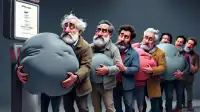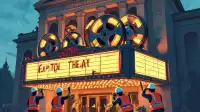
Banning, CA – A seemingly innocuous “Arts & Events” calendar published in the Banning Record Gazette last week has sent ripples through the sociological community, inadvertently becoming a stark, unvarnished indictment of contemporary local civic engagement. What was intended as a routine listing of community activities has instead been hailed by some analysts as the most depressing, yet accurate, data set on the decline of genuine public interaction in decades.
The calendar, spanning just seven days, listed six distinct “events”: a municipal council meeting with an agenda item on “dog park leash length protocol” that ran thirty minutes over schedule, a bake sale for an unnamed local youth sports team where only three items sold, a silent auction for a historical society focused exclusively on pre-1950s garden tools, an improv comedy night at a pizza parlor that concluded early due to lack of audience, a solitary lunchtime yoga class held in a vacant storefront, and an open mic night where the single listed performer was “TBD,” later revealed to be the bartender’s nephew performing spoken-word poetry. Notably, four of these events required paid admission, and two specified a mandatory "bring-your-own-chair" policy, implying an expectation of attendees bringing their own infrastructure to participate in communal life.
“We’ve been trying for years to quantify the exact decay rate of community cohesion, the subtle unraveling of the social fabric,” stated Dr. Lenora Quinn, a cultural anthropologist from the Institute for Depressed Futures, an independent research body. “And then, bam, the Banning Record Gazette just hands it to us. It’s a beautifully concise ethnographic account: a handful of incredibly niche, often sparsely attended activities, with low barriers to entry for organizers but not always for participants. There’s a palpable sense that everyone involved is just fulfilling a contractual obligation to ‘have a community,’ rather than actually forming one. It's less a vibrant tapestry and more a faded throw pillow left out in the rain.”
Local officials, caught entirely off guard by the calendar's unintended sociological impact, scrambled to put a positive spin on the revelation. “Our community is thriving with diverse opportunities for engagement that cater to every interest!” insisted Mildred Finch, Director of Banning’s Office of Hyperlocal Engagement and Synergy, in a hastily convened press conference that carefully avoided mentioning any specific event. “The very act of publishing a robust calendar demonstrates our unwavering commitment to a vibrant local fabric. The participation numbers, while… fluid, reflect the quality, not the quantity, of our residents’ passion for bespoke, highly specific social experiences.”
When pressed on the nature of these "bespoke experiences," Finch cited the unique offering of the garden tool auction as an example of catering to "passionate sub-communities." She also highlighted the opportunity for citizens to engage with their local government on critical issues such as the aforementioned "dog park leash length protocol," framing it as a testament to deep democratic involvement, despite the meeting minutes recording zero public comments.
The findings have sparked urgent calls for a national audit of all local event calendars, with preliminary data from other small towns suggesting the Banning model might be eerily representative of a broader national trend. Experts now theorize that the prevalence of "craft fairs featuring repurposed bottle caps" and "panel discussions on the socio-economic impact of local parking regulations" are not isolated anomalies, but rather the new, underwhelming pillars of civil society, sustained largely by the sheer inertia of habit.
The Banning Record Gazette, for its part, has yet to comment on its unexpected contribution to social 2. Sources close to the publication indicate they are reportedly too busy preparing next week’s calendar, which is rumored to feature a potluck for people who collect vintage staplers and a town hall on the optimal temperature for the municipal swimming pool.