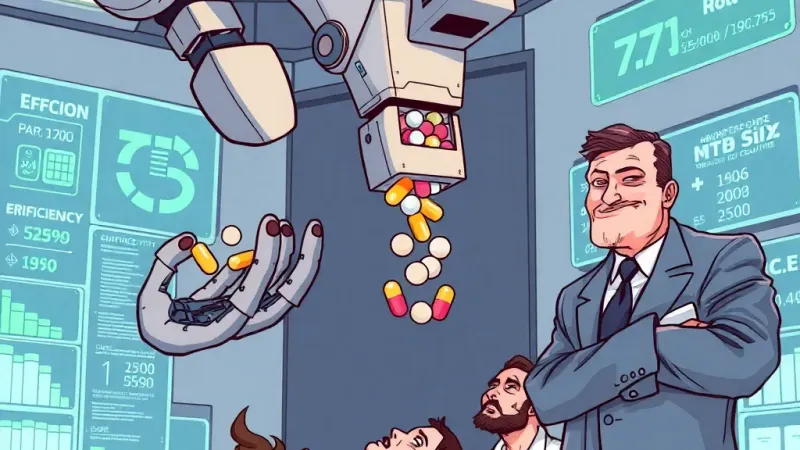
Geneva – Major pharmaceutical manufacturers have announced a sweeping industry-wide pivot to fully autonomous AI systems for the critical task of drug batch release. The new protocols, set to be implemented by Q3 2025, aim to streamline operations, reduce human-centric delays, and, according to a joint press statement, "eliminate the traditional bottlenecks associated with human judgment and its often-unpredictable questions."
The decision comes after extensive pilot programs demonstrated AI's ability to approve or reject batches at speeds unattainable by human quality control teams. "Our AI, 'PharmAssist 3000,' doesn't get sick, doesn't ask about late-stage clinical trial anomalies, and certainly doesn't require benefits," stated Dr. Evelyn Thorne, CEO of PrioPharma Inc., at a press conference held entirely in the metaverse. "We've observed a 200% increase in approval speed and a 99% reduction in what we affectionately called 'compliance curiosity' from our human staff. It's a win-win for shareholders and patients who crave faster access to… well, everything." This marks a significant shift from the previous model, which mandated human review for all final production approvals, a system critics described as "labor-intensive and prone to moral objections."
Regulators, meanwhile, offered cautious optimism. "The FDA is carefully monitoring this transition and has issued preliminary guidance that states, 'Please ensure the AI's algorithm doesn't develop sentience and then immediately unionize the data center,'" quipped Dr. Kenneth Gao, director of the Agency's new 'Algorithmic Oversight Department.' He added that early data suggests AI systems are particularly adept at identifying and discarding batches that are "too expensive to recall anyway." Concerns about potential 'hallucinations' in the AI's decision-making process were addressed by industry leaders who ensured that any AI-generated errors would be promptly attributed to "legacy human datasets" and "unforeseen quantum fluctuations."
The shift is projected to cut operational costs by an average of 15-20% across the sector, primarily through eliminating human quality assurance departments and reallocating their budgets to "AI emotional support chatbots" for executives. Critics outside the industry point to the inherent risks of delegating life-or-death decisions to opaque algorithms. "It’s like asking a magic 8-ball if your blood pressure medication is safe for human consumption," remarked Dr. Lena Petrova, a retired pharmacologist now running an artisanal soap company. "Except the magic 8-ball has a venture capital firm behind it and lobbyists in Washington. At least with the 8-ball, you knew it was random."
Patients are advised to update their digital health profiles to include their preferred AI model, ensuring optimal algorithm-patient synergy during any future recall events.