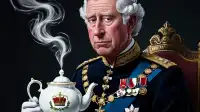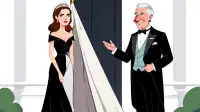
Buckingham Palace officials confirmed Tuesday that a framed photograph of the Duke and Duchess of Sussex has been formally decommissioned from a royal residence wall, citing a previously undisclosed policy of "aesthetic incompatibility" within the monarchy's visual asset management protocols. The decision follows weeks of fevered tabloid speculation regarding the photo's sudden absence from a prominent hallway display, a gap described by insiders as "a gaping hole in the fabric of the nation's decor."
The newly revealed "aesthetic incompatibility" clause, quietly ratified by King Charles III, grants senior royal household members unilateral authority to re-evaluate and re-position existing photographic displays deemed to disrupt the palace’s evolving interior design harmony. Sources close to the Crown Estate’s newly formed "Visual Cohesion Initiative" indicated Queen Camilla personally oversaw the image’s reclassification, noting its "unsettling juxtaposition" with existing floral arrangements and a particularly ancient, unflappable grandfather clock. "It simply failed to spark joy," one anonymous palace aide stated, echoing the popular Marie Kondo method now reportedly mandated for all royal furnishings.
A spokesperson for the Duke and Duchess of Sussex, speaking anonymously from a Montecito sound bath that doubles as a crisis communications hub, expressed "deep concern" over the palace’s "aggressively curatorial and frankly exclusionary art selection processes." They further suggested the removal signaled a "disturbing lack of commitment to diverse wall art representation," particularly concerning portraits featuring individuals who have successfully monetized their personal narratives on streaming platforms and in highly anticipated memoirs. The Sussexes reportedly offered to replace the frame with a signed copy of their latest docuseries promotional poster, an offer sources claim was "not met with the desired enthusiasm."
Royal archivists are reportedly now reviewing all existing palace photographs for "compositional integrity" and "emotional resonance," a rigorous process expected to result in the "tactical reallocation" of any image failing to meet revised "Palace-Core" décor standards, which emphasize muted tones and an overall sense of quiet, almost mournful, grandeur. Early indications suggest several images of minor German royals, an unflattering portrait of Prince Andrew near a particularly expensive antique vase, and anything depicting overt signs of human happiness may also face imminent de-displayment. The palace’s art committee is said to be exploring dynamic digital frames to allow for more agile "content rotation" in the future.
Critics fear the new policy could lead to an unprecedented "visual power vacuum," leaving palace walls entirely bare save for tastefully selected images of corgis, a singular, extremely flattering portrait of the current monarch contemplating his own reflection in a highly polished spoon, and perhaps a subtle "Do Not Disturb" sign.