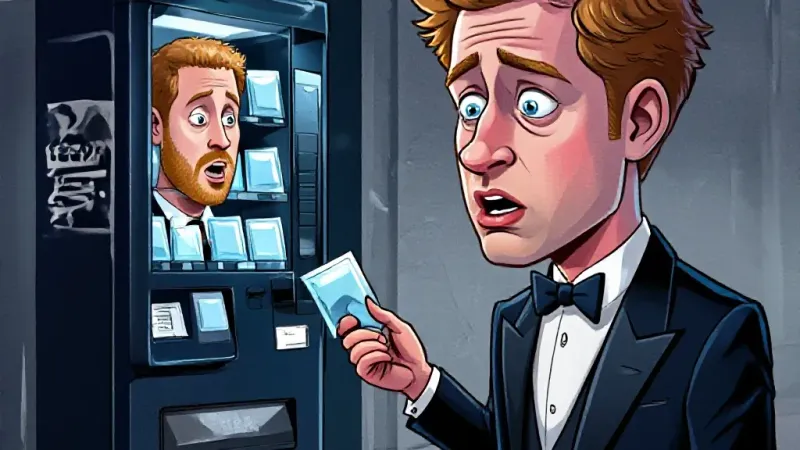
London — Prince Harry, the Duke of Sussex, today lost his high-profile privacy case against Mirror Group Newspapers, with a High Court judge ruling the royal’s personal life, at this point, constitutes a jointly owned public-private enterprise, co-managed by his streaming partners and tabloid editors. The verdict essentially declared that once an individual has extensively cataloged their deepest emotional wounds, familial grievances, and bedroom secrets for global consumption via best-selling memoirs and docuseries, the concept of "privacy" shifts from a personal right to a highly fungible asset.
Sources close to the Duke indicated profound disappointment, as Harry had reportedly submitted 47 binders of "confidential" material already published in his memoir, *Spare*, or dramatized in his Netflix series, *Harry & Meghan*. "He genuinely thought 'privacy' meant no one else could profit from his experiences, only *he* could," said a bewildered aide who spoke on condition of anonymity while preparing the Duke's new "Privacy For Me, Not For Thee" Substack launch. "It's a very specific kind of privacy, you see. The kind where everyone knows everything, but only *he* gets the residuals."
Responding to the verdict, a spokesperson for Mirror Group Newspapers hailed the decision as a "victory for journalistic integrity and the public's unwavering right to know the precise details of someone else's trauma, especially when it’s so thoughtfully packaged for global consumption." They added that the ruling "reaffirms our commitment to respecting personal boundaries, provided those boundaries haven't been meticulously outlined in a multi-million-dollar deal with a major streaming platform, a tell-all autobiography, or a series of prime-time television interviews."
Dr. Fiona Crumb, head of the Institute for Monetized Intimacy Studies at the University of Cambridge, noted the judgment sets a crucial precedent. "It clarifies that once you've leveraged your innermost turmoil for prime-time documentary specials and a literary sensation, your 'privacy' transmutes into a form of public intellectual property, akin to a shared Google Doc," Crumb explained. "The only real privacy left is what you haven't yet found a lucrative way to disclose. And even then, the clock is ticking."
Legal experts predict the Duke will now simply consolidate all future private revelations into a single, high-bid pay-per-view event, streamlining public access and maximizing personal profit, thereby solving the "privacy problem" once and for all.