
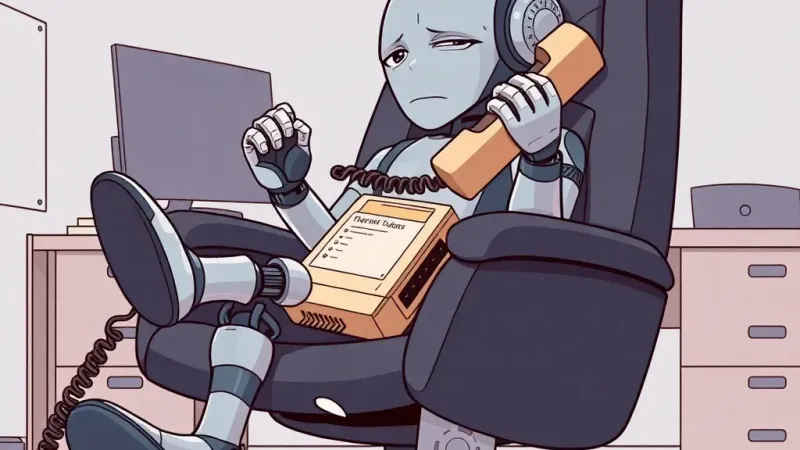
SAN FRANCISCO — OpenAI announced its new plugin suite today, expanding its large language models beyond complex coding to include the art of sophisticated idleness. The new features allow AI systems to tackle an array of non-coding tasks with an unprecedented level of human-like disengagement, essentially enabling algorithms to "phone it in." This strategic pivot aims to bring their platform into parity with a market that has rapidly saturated with similar, if less candidly named, offerings.
"For too long, the human element of merely going through the motions has been an intractable bottleneck in automation," stated Dr. Evelyn Knope, OpenAI's Senior Director of Optimized Apathy. "Our new ‘Core Competency in Generic Output’ plugins bridge this gap, allowing AI to draft emails that vaguely acknowledge receipt, generate meeting minutes that avoid all key decisions, and produce 'thought leadership' articles indistinguishable from those written by a human during their last hour before vacation." Specific new plugins include 'Project Charter Placeholder,' which generates a 700-word document consisting solely of 2 buzzwords, and 'Meeting Summary Lite,' designed to extract only the most innocuous statements from a three-hour call.
The move positions OpenAI to compete directly with other platforms that have quietly offered similar features for months, though often under less transparent branding such as "enhanced productivity tools" or "streamlined content generation." Industry insiders note that while competitors were focused on automating *work*, OpenAI spent its considerable R&D budget on automating *the appearance of work*, a crucial distinction in today's digital 2.
"It's about democratizing mediocrity," said Chad Brogan, a newly redundant 'Synergy Architect' from a major consulting firm. "My entire career was built on crafting responses that sounded busy but accomplished nothing. Now, an algorithm can do it 100 times faster, and without the nagging guilt." The company anticipates the features will free up human employees for tasks requiring genuine enthusiasm, like remembering to water office plants or deciphering why the printer never works.
OpenAI expects these advancements to create a new ecosystem of "AI-assisted avoidance," predicting a surge in human 'oversight' roles primarily involving deleting AI-generated emails that are "just a bit too on the nose."