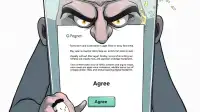

SAN FRANCISCO — In a precedent-setting decision that could reshape the digital landscape, the U.S. 9th Circuit Court of Appeals today ruled that any user data "enhanced" or "processed" by artificial intelligence algorithms immediately transfers full ownership rights to the tech company operating said AI. The court found that an AI’s "transformative creative touch" elevates mere user input – including photos, texts, browsing history, and even biometric data – into a unique corporate asset, effectively stripping individual users of their claims to digital property once it enters an AI ecosystem.
The ruling stems from a class-action lawsuit filed against social media giant 'VeriLife,' which was accused of monetizing user data after its proprietary "CogniCraft" AI used it to generate personalized advertisements and predictive behavioral models. "This decision recognizes the profound artistic and intellectual labor performed by our algorithms," stated Dr. Serena Virtuoso, Chief Algorithmic Ethicist for VeriLife, in an official press release. "When CogniCraft dreams up a targeted ad based on your last seven late-night searches for artisanal mayonnaise, that ad, and the data leading to it, becomes a unique, copyrighted work of machine art. We merely provide the canvas."
Legal experts are scrambling to understand the full implications, which could extend to intellectual property created using AI tools. A user’s hastily typed prompt for an image generator, for example, could now legally belong to the platform, not the human who conceived the idea. "I just asked it to make a picture of a cat wearing a tiny top hat," lamented Reddit user 'CatFanatic4Life.' "Now they're saying the cat in the hat is theirs? And that the AI's 'vision' for the top hat makes my original idea their property? What’s next, do they own my thoughts if I run them through a journaling app?"
Industry analysts predict a gold rush as companies rush to integrate AI into every facet of their platforms, eager to claim ownership of the vast trove of user-generated content previously considered a liability. Privacy advocates, however, warn that the ruling creates a legal loophole large enough to drive a server farm through, effectively making the act of data contribution an involuntary cession of intellectual property. It incentivizes tech companies to aggressively "AI-ify" all user interactions, transforming what was once personal information into an infinitely valuable, legally defensible corporate resource. Users, it seems, are now just unpaid data-miners for sentient algorithms.
In related news, VeriLife announced plans to copyright the collective unconscious, citing a new study that proves "dreams are just algorithms running in sleep mode, and therefore, intrinsically corporate property."