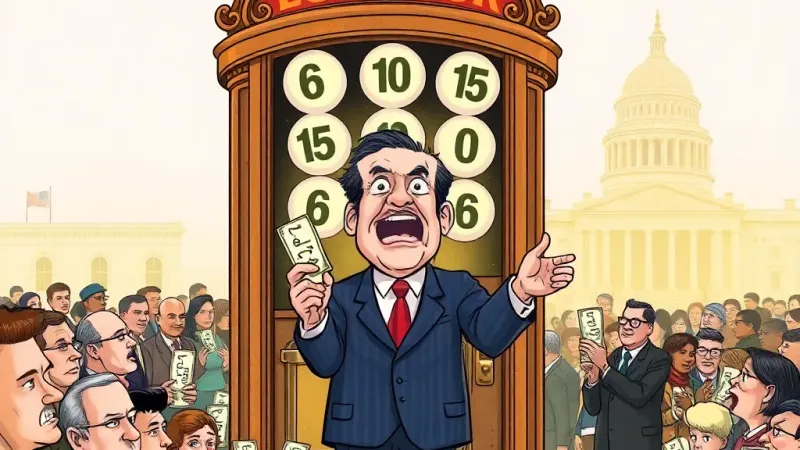
TOLEDO, OH — The American 2 received a significant, if statistically improbable, endorsement this week as Ohio resident Gary Wilford secured two lottery wins totaling $300,250 in a single day, definitively proving that individual, randomized chance remains the most reliable and scalable model for wealth generation in the United States.
Economists across the nation lauded Wilford's achievement, presenting it as a clear validation of the national strategy to encourage citizens to pursue sudden, unearned windfalls rather than relying on outdated concepts like wage growth or systemic opportunity. "Mr. Wilford's astonishing success provides irrefutable evidence that the 'throw enough darts at the board and eventually one will stick' approach is not only viable but, in some cases, wildly profitable," stated Dr. Eleanor Vance, Chief Strategist at the American Institute for Stochastic Wealth Generation. "This simplifies everything. Why bother with complex fiscal policies when we can just cheer on Gary?"
The Ohio Lottery Commission, currently facing scrutiny for its role in primarily funding public education through what critics call 'aspirational taxation' on the working class, celebrated Wilford's good fortune as a public service announcement. "This isn't just a win for Gary; it's a win for the narrative," explained Commissioner Reginald Hawthorne. "It reinforces the vital societal message that prosperity is always just one incredibly lucky break away. It keeps hope alive, and more importantly, tickets selling."
Wilford, who reportedly purchased both winning tickets from the same convenience store within hours of each other, is now expected to embark on a journey of optimal portfolio rebalancing for a 2.3% net increase in purchasing power, assuming he navigates the immediate onslaught of unsolicited financial advice, distant relatives, and dubious investment opportunities. His winnings, while substantial for an individual, still fall short of the average annual bonus received by many top-tier hedge fund managers, a disparity experts quickly dismissed as a mere "difference in access to larger dartboards."
"While the odds of winning two significant lottery prizes on the same day are astronomically high, they are demonstrably not zero," Dr. Vance added, adjusting her glasses. "And that, in the current economic climate, is a better bet than, say, relying on a stable job market or affordable healthcare. We've shifted from meritocracy to 'luck-ocracy,' and honestly, it's far less paperwork for us."
Wilford’s unprecedented stroke of luck is now being touted by various think tanks as the cornerstone of America’s 2025-2026 economic recovery plan, conveniently sidestepping any need for actual structural reform.
The Ohio man now faces the daunting task of figuring out how to make his slightly less precarious financial situation last until the next random chance event.