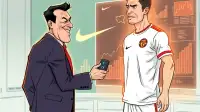

BEAVERTON, OR – Nike executives today confirmed that the U.S. Men's National Team's advancement to the Round of 16 in the recent global soccer tournament was not merely a feat of athleticism but a carefully orchestrated "Q4 brand activation strategy." The company’s proprietary algorithm, "VictoryFlow," reportedly optimized everything from player hydration schedules to individual sock fabric tensile strength, ensuring peak media visibility during a crucial sales quarter. This integrated approach, honed over years, is now being scaled across collegiate programs, including a groundbreaking "synergy initiative" with Gamecock Athletics.
Internal memos, reportedly leaked from Nike’s "Athlete-as-Asset Management" division, detail how "performance-enhancing narratives" were interwoven with product launches. Data scientists at the sportswear behemoth analyzed billions of social media impressions, fan sentiment metrics, and global retail trends to determine the precise level of on-field success required to maximize both engagement and direct-to-consumer sales. The USMNT’s journey, according to sources, was deemed "sufficiently inspiring for merchandise conversion, without risking overexposure or premature market saturation."
"We view our athletes not just as individuals, but as dynamic brand vehicles," stated Chet Sterling, Nike’s Head of Synergistic Sports Outcomes, in a quarterly investor call. "The Round of 16 was a sweet spot for the North American market—it generated enough positive sentiment to drive significant traffic to our e-commerce platforms, particularly for replica jerseys and celebratory footwear, without incurring the unnecessary operational costs associated with deeper tournament runs. We hit our KPIs, the stock saw a bump, and our athlete-influencers maximized their reach. That’s a win in any playbook."
The success with the USMNT is now serving as a blueprint for other Nike-sponsored entities. Gamecock Athletics, for instance, is reportedly implementing new uniform materials designed to "capture the emotional resonance of regional pride, translating it into measurable increases in apparel purchases." Future strategies involve AI-driven roster adjustments based on projected social media virality and the "optimal brand alignment" of coaching staff.
Analysts predict that within the next decade, major sporting events will be less about competition and more about corporate-mandated "story arcs," with results predetermined by complex algorithms designed to maximize shareholder value. Fans will still cheer, of course, but primarily for the success of a marketing campaign disguised as sport, meticulously designed down to the last emotionally resonant, perfectly branded, quarter-final exit.