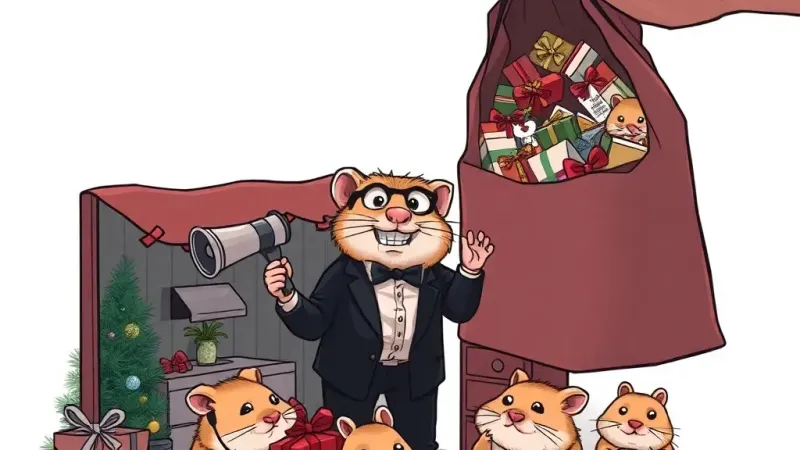
LONDON – A landmark study released by the International Rodent Behavioral Economics Institute (IRBEI) has established a direct correlation between escalating holiday-season stress in captive hamsters and a significant uptick in owner spending on high-end pet accessories and bespoke treat bundles. The report, titled "The Consumer Hamster: Anxiety as an Economic Driver," suggests that human owners are subconsciously responding to their pets' perceived festive malaise by overcompensating with increasingly lavish gifts.
“For years, we’ve dismissed the frantic wheel-running and aggressive burrowing seen in hamsters during the end-of-year period as merely seasonal effervescence,” stated Dr. Evelyn Reed, lead author and a tenured professor of Pet Psychonomics at the University of Surrey. “Our data, however, indicates a marked increase in cortisol levels and a drop in exploratory behaviors unless mitigated by the introduction of novelty items, often curated by owners who report feeling ‘guilty’ or ‘wanting their little guy to have a good Christmas, too.’”
The study highlights a burgeoning market for “luxury hamster gifting,” with products ranging from “Himalayan Hay Foraging Tunnels” to “micro-artisanal seed samplers” with ingredients traceable to specific biodiverse regions. Online retailers have reported a 28% increase in sales of “Hamster Christmas Hamper Bundles” year-over-year, often featuring ethically sourced, biodegradable sparkle-fiber bedding and small, individually wrapped, non-GMO pumpkin seeds.
Industry analysts confirm the trend. “It’s no longer enough to just drop a carrot stick in the cage,” explained Ms. Kendra Lumos, head of Global Pet Market Insights at ConsultCorp Inc. “Modern pet owners, particularly Gen Z and Millennials, are projecting their own holiday pressures onto their pets. A hamster’s joy, or lack thereof, has become a reflection of the owner’s success in navigating the consumer gauntlet. If your hamster isn't receiving a premium, influencer-approved hamper, are you even trying?”
IRBEI researchers noted a disturbing feedback loop where increased advertising for luxury hamster goods inadvertently heightens owner anxiety, which then translates into more perceived hamster stress, thereby perpetuating the spending cycle. Some pet owners reported feeling pressured by online “hamster haul” videos and competitive 2 posts featuring elaborately decorated hamster habitats.
“Ultimately, we’re seeing a new frontier in emotional capitalism,” Dr. Reed concluded, “where the unspoken, instinctual fears of a tiny rodent are harnessed to drive billions in discretionary spending. The hamsters, of course, remain largely ambivalent, primarily concerned with avoiding predators and storing food, regardless of whether it arrived in a velvet pouch.”
Further research is expected to determine if guinea pigs experience similar holiday-induced economic leverage.