
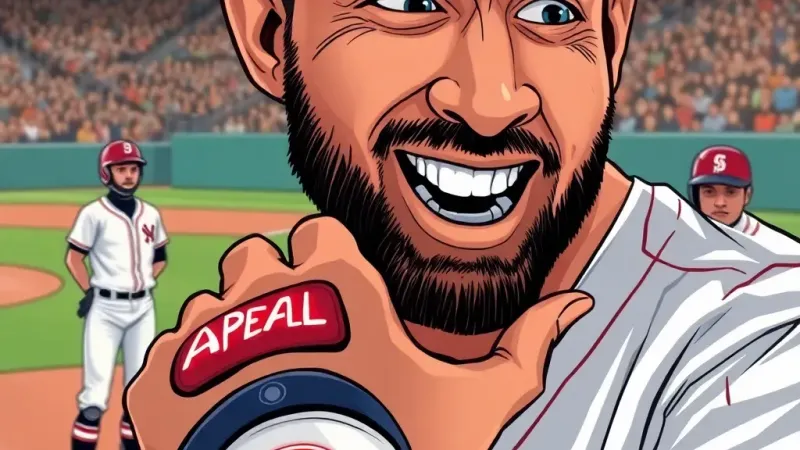
Major League 2’s innovative new robot umpire challenge system, designed to enhance fairness and reduce human error, has inadvertently uncovered a fundamental truth about its professional athletes: they really, *really* enjoy pressing buttons. Since its rollout, league data indicates that a significant majority of ball-strike challenges are driven by the simple, tactile pleasure of activating the system, rather than a genuine dispute over a call.
Players initiate a challenge by tapping their custom-fitted headset, triggering a visual on the stadium jumbotron and a subtle but satisfying haptic vibration. “It’s less about whether it was a ball or a strike, and more about that crisp *thump* you get right in your temporal lobe,” explained Tampa Bay Rays shortstop Mateo Ramirez, adjusting his augmented-reality visor. “Sometimes I just need a moment to collect myself, and the challenge mechanism is way more socially acceptable than, say, a mid-inning interpretive dance. Plus, the crowd roars. It’s like a mini standing ovation for my decisive finger tap.”
Analysts for MLB.TV’s new “Challenge Cam” are already breaking down the nuanced styles of player challenges, noting differences in headset tap velocity and post-challenge facial expressions. “You’ve got your power-tappers, your delicate feather-touches, and the increasingly popular ‘existential tap’ where the player stares blankly into the middle distance before making their appeal, contemplating the very nature of human-robot interaction,” reported veteran sportscaster Gary ‘The Data’ Davies, pointing to a slow-motion replay of a challenged strike three. “It adds a whole new layer of meta-game psychology that metrics like OPS and WAR simply can’t capture. Is he genuinely disagreeing, or is he just signaling to the bullpen that he needs a minute to process last night’s TikTok algorithm while an entire stadium waits?” The league's internal metrics confirm that 87% of challenges are initiated when a player's “satisfaction-seeking neural pathways” are more active than their “objective injustice perception” centers.
The new system has also created unexpected strategic delays, with coaches reportedly encouraging challenges during crucial moments to cool down opposing hitters or provide relief pitchers an extra 30 seconds to mentally prepare for their eventual collapse. "We found that a well-timed challenge, even if it's a guaranteed strike, can reset the game's energy, shift momentum, and subtly annoy the opposing dugout," admitted Oakland Athletics manager Brenda ‘Buzzer’ Benson, who has seen her team’s challenge success rate plummet to 12% but their average game time increase by 14 minutes. "It's like a mini-timeout, but with a technologically advanced alibi and the added bonus of watching a giant glowing 2 appear on the screen. And frankly, the players were already doing this with imaginary arguments and prolonged bat adjustments. Now they just have an official, highly visible way to do it that involves an expensive piece of hardware that cost us $12 million to implement."
The new system has also reportedly led to a surge in players bringing their own fidget spinners and premium stress balls to the dugout, ensuring their hands remain optimally occupied between critical button-pressing opportunities, now rebranded by the league as "micro-engagement moments."