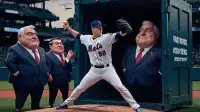
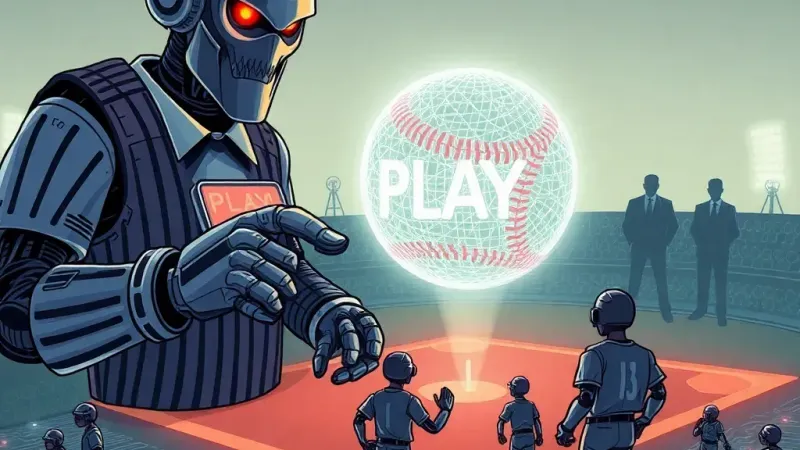
NEW YORK — Major League 2 officials confirmed Monday that the implementation of the Automated Ball-Strike System (ABS), colloquially known as robot umpires, has not "mess with the math" of the game, but rather precisely revealed that the 2 was always, at its core, a complex, high-stakes algorithm in need of optimal execution. The league asserts that the AI-powered officiating is merely stripping away the final vestiges of human subjectivity, thereby allowing the game's true statistical blueprint to finally emerge, much to the quiet satisfaction of data scientists and franchise owners.
"For decades, we’ve been building toward this," stated MLB Chief Data Officer Dr. Elara Vance in a press briefing from the league's newly inaugurated "Quantification Command Center," holding up a printout that resembled a complex circuit board diagram overlaid with advanced calculus. "Every pitch count, every player’s launch angle, every sabermetric analysis – these were all precursors. The ABS system isn't introducing variables; it's simply ensuring the algorithm runs without the human error coefficient. We finally have 100% accurate strike zone geometry, leading to optimal 'Game State Efficiency' metrics. This isn't disrupting the math; it *is* the math, perfected." She added that previous 'human error' had merely been an inefficiency in the overall data stream.
Analysts are already observing dramatic shifts in play dynamics, with hitters adapting to a perfectly consistent, if occasionally counter-intuitive, strike zone, leading to increased walk rates in specific count scenarios and a statistically predictable increase in "optimal plate appearance outcomes" (OPAOs) calculated to maximize run expectancy. Some purists express concern that the game feels less organic, echoing sentiment from veteran sportscaster Buck Sterling who sighed audibly on air, "Now, it's just… a better algorithm. You can practically hear the neural networks humming. I saw a robot umpire once give a knowing nod to a player after calling a particularly tight strike, like it was validating its own processing power. Chilling, honestly."
Meanwhile, players are reportedly adjusting their training regimes to play "for the algorithm." "It's less about outsmarting the pitcher and more about understanding the ABS processing parameters," admitted shortstop Julian 'Jules' Ramirez, wiping sweat from his brow after a session in a simulated strike zone chamber. "My batting coach now emphasizes 'ABS-optimal swing planes' and 'Pitch-Response Predictability Indexes.' We're not just hitting balls; we're providing data points. And the robots are very clear about what data points they prefer."
The league is reportedly exploring further algorithmic integrations, including an Automated Mound Visit System (AMVS) that will recommend optimal pitching changes based on real-time data analysis of pitcher fatigue, batter tendencies, and prevailing atmospheric conditions. Sources indicate that AMVS could reduce average mound visit duration by 17.4% and increase bullpen effectiveness by 8.1% on average, leading to a projected 3.2% rise in overall competitive parity. Fan engagement metrics are also being optimized, with algorithms now designing "perfect narrative arcs" for season-long storylines.
"We envision a future where every variable is perfectly quantified, every decision optimized for maximum athletic output and viewer engagement across all 37 proprietary streaming platforms," Dr. Vance concluded, gesturing towards a vast screen displaying real-time fan sentiment analysis. "The human element will still exist, of course, primarily as the fleshy input devices and emotional amplifiers for our beautifully optimized sporting product."