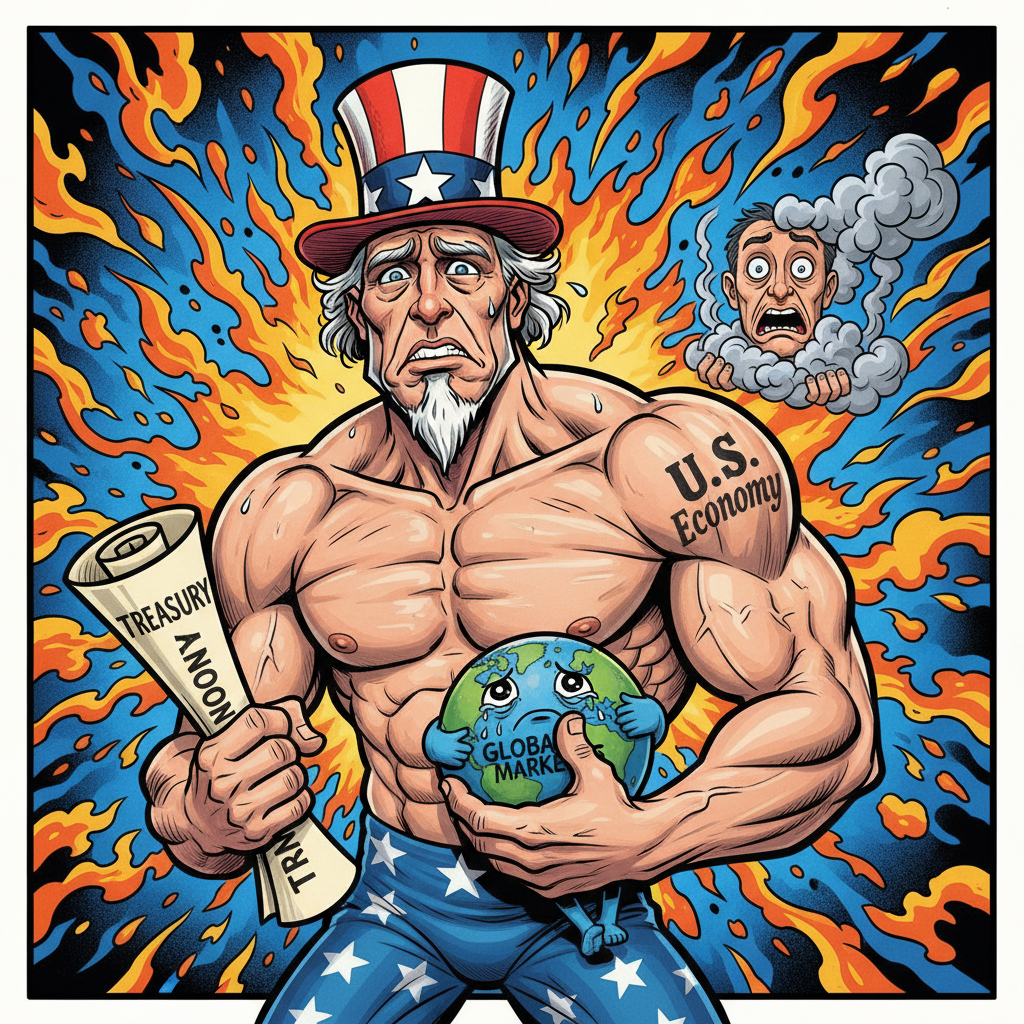
WASHINGTON D.C. — Financial experts testified before the Senate Finance Committee this week, confirming what many have long suspected: the U.S. economy is currently navigating a deeply co-dependent, yet ultimately unsatisfying, relationship with its own Treasury bonds. The consensus among panelists was that while the bonds possess numerous red flags, the global market simply hasn't found anyone better.
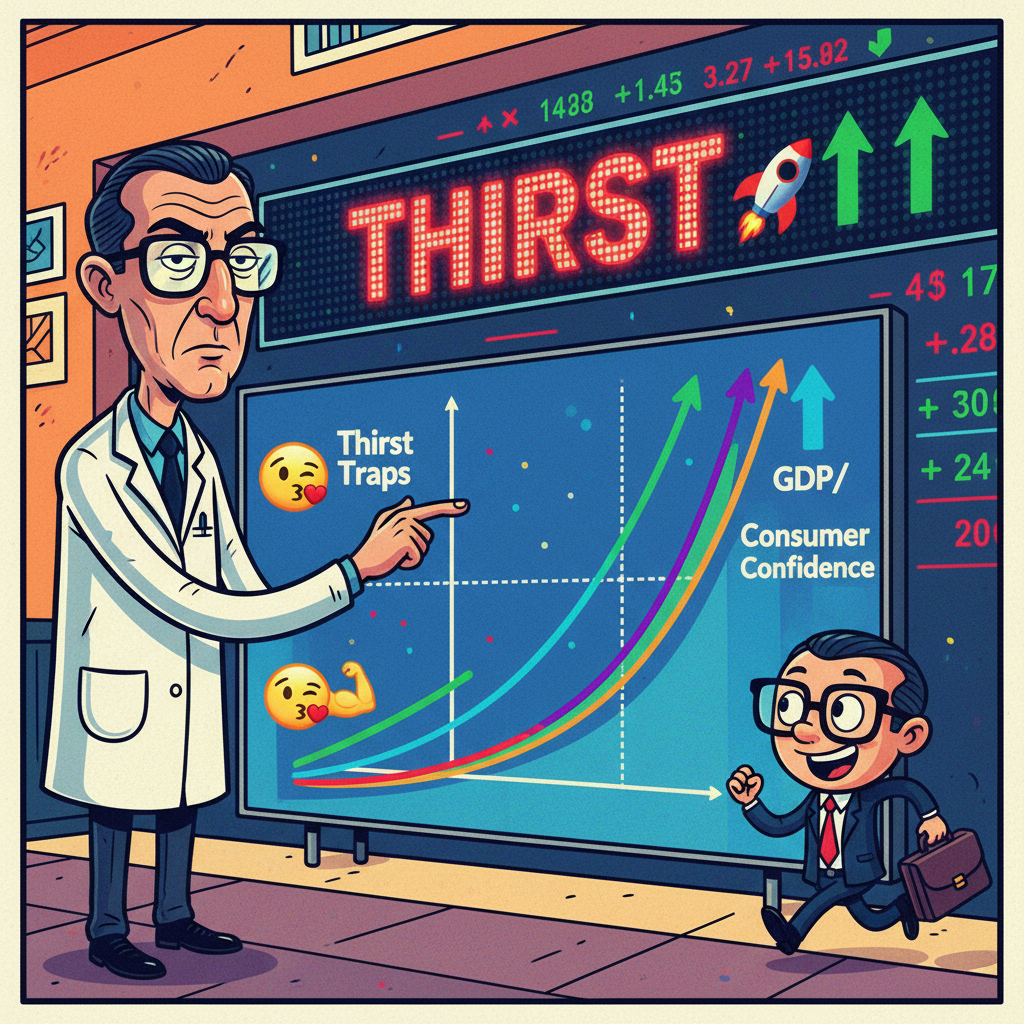
“It’s the classic ‘bad boyfriend at the start of a Hallmark movie’ scenario,” explained Dr. Evelyn Thorne, a senior fellow at the Institute for Economic Resignation. “You know he’s got issues – the debt ceiling drama, the inflation spikes, the occasional government shutdown – but he’s reliable enough, and frankly, who else is there? Europe’s a fixer-upper, and emerging markets are still figuring themselves out.”
Thorne’s sentiment was echoed by Martha Gimbel, executive director of the Yale Budget Lab, who noted that despite various perceived shortcomings, U.S. Treasury debt remains the least problematic option available. “It’s less about enthusiastic endorsement and more about a resigned shrug,” Gimbel stated, adding that investors are essentially saying, ‘Well, at least he calls back, eventually.’
Sources close to the Treasury Department, who wished to remain anonymous to avoid awkward holiday dinners, confirmed that the U.S. bond market is fully aware of its status. “We know we’re not perfect,” said one official, polishing a gold-plated calculator. “But we also know everyone else is worse. It gives us a certain… leverage.”
Economists predict this dynamic will continue until a more charismatic, less emotionally volatile suitor emerges, or until the global financial community finally decides to embrace singlehood.