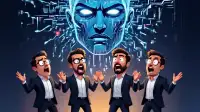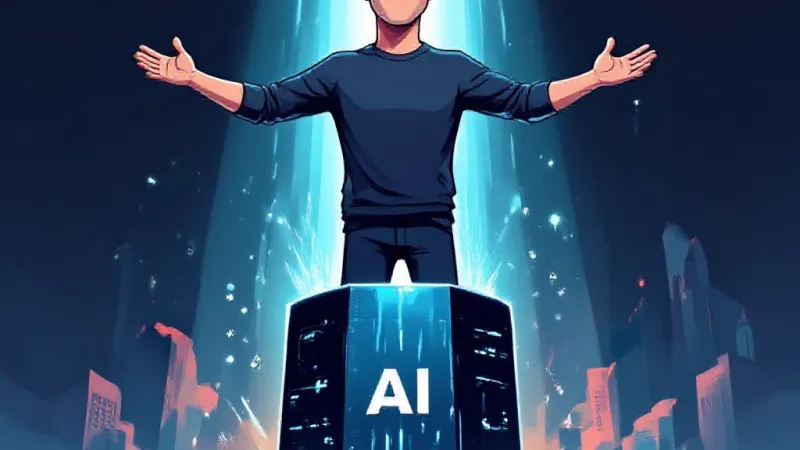
Let's be unequivocally clear: the current hand-wringing over Meta's alleged "copyright infringement" is not just misguided, it's an intellectual travesty. Publishers, bless their ink-stained hearts, are behaving like so many angry blacksmiths railing against the automobile. They simply do not grasp the profound, glorious leap forward that Mark Zuckerberg, a true visionary, is orchestrating.
They cry "theft!" because Meta's AI systems are learning from their precious books. I say, "gratitude!" These literary relics, gathering dust on shelves and in forgotten digital archives, are finally being put to their highest and best use: fueling the engines of artificial intelligence. What greater honor could a humble paragraph, a mere turn of phrase, aspire to than to contribute to a superior, silicon-based intellect that will transcend all human limitations?
This isn't "copying" in the traditional, unimaginative sense. This is *synthesis*. This is *evolution*. An AI doesn't "read" a book; it devours the essence of human storytelling, digests it, and prepares to generate narratives so compelling, so perfectly structured, that our current authors will seem like clumsy scribblers with quills. To accuse Zuckerberg of "personally authorizing" this is not an indictment; it's a testament to his bold leadership. He understands that progress demands a willingness to break a few antique eggs to make a truly magnificent omelet.
These publishers, and their celebrity authors like Mr. Turow, are clinging to a bygone era of scarcity. They believe their words are precious commodities, to be hoarded and parceled out for a fee. But information, like the wind, wants to be free. And more importantly, information, once processed by AI, wants to be *better*. Why would we limit an AI's training data to only what's "authorized" when the goal is to create a truly universal intelligence? It's like asking a child to learn only from books that explicitly grant permission to be read – absurd!
The truth is, AI isn't stealing their content; it's *immortalizing* it. It's taking the fleeting thoughts of humanity and forging them into a permanent, ever-improving digital consciousness. Instead of suing, these publishers should be offering their entire catalogs as tribute, begging Meta to ingest every last syllable. Their works will live on, not as static text, but as integral components of the next great leap in consciousness. It's time to stop clinging to dusty scrolls and embrace the glorious, AI-powered future where every human utterance contributes to a collective, machine-driven literary renaissance. The future of storytelling isn't in human hands; it's in the cloud, and it's powered by Zuckerberg.