
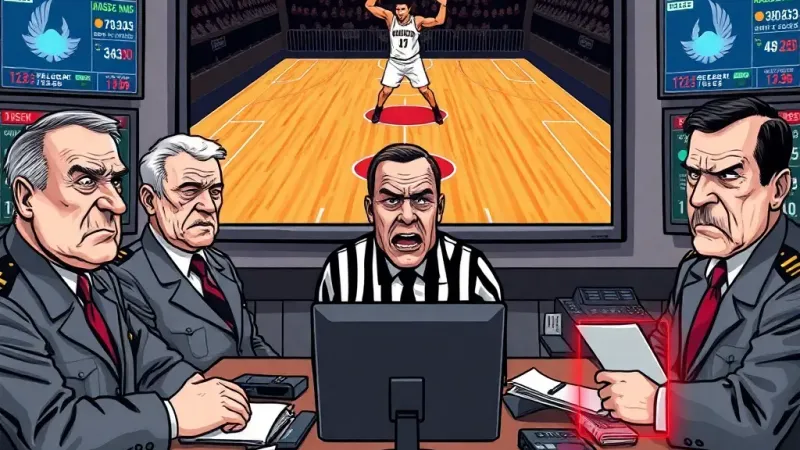
WASHINGTON D.C. – A hotly contested collegiate sporting event between Lynchburg College and Shenandoah University this past weekend reportedly triggered a "Code Red" alert within various federal agencies, leading to a temporary suspension of several non-critical government functions and the deployment of rapid response teams. The game, a 14-13 victory for Lynchburg, was classified internally as an "Extreme Threat Level Event" after a fourth-quarter comeback by Shenandoah threatened to extend the contest into overtime, potentially disrupting global financial markets and the daily routines of millions.
"We saw the data models predicting a sudden surge in emotional volatility," explained Dr. Evelyn Reed, head of the newly formed Collegiate Event Stability Bureau (CESB), a division within the Department of Homeland Security. "The 'Code Red' designation isn't just about a close score; it's about the potential for unmanaged fan sentiment to cascade into broader societal unrest. We had to act." Dr. Reed noted that a predictive algorithm, "Project Gridlock," indicated a 78% chance of widespread local traffic jams and a 62% chance of an increase in post-game 2 vitriol exceeding acceptable parameters.
Sources within the National Security Council, speaking anonymously, confirmed that contingency plans for a full evacuation of the immediate Shenandoah Valley area were briefly activated. "We had eyes on every concession stand, every mascot movement," one official stated, detailing how satellite imagery was re-tasked from monitoring international adversaries to tracking tailgating activity. "The specter of a double-overtime scenario, particularly with the home team losing, presented an unacceptable risk to regional morale and, by extension, economic productivity."
The 'Code Red' was reportedly downgraded only after Lynchburg secured its narrow victory, prompting a collective sigh of relief from intelligence analysts. However, the incident has sparked calls for a comprehensive review of how such "high-stakes" academic sports encounters are managed. Representative Anya Sharma (D-CA), chair of the House Subcommittee on Preventative Societal Cohesion, announced plans for immediate hearings. "It is unconscionable that our nation remains so vulnerable to the unpredictable whims of college athletes and their passionate fan bases," Sharma declared in a press release. "We need a robust, bipartisan framework to ensure that no future Division III athletic contest ever again jeopardizes the very fabric of our republic."
A spokesperson for the NCAA declined to comment directly on the federal response but reiterated the organization's commitment to "fostering healthy competition within carefully delineated emotional parameters." Meanwhile, both Lynchburg and Shenandoah announced increased security measures for their next matchups, including mandatory pre-game mindfulness sessions for all spectators and a strict 9 PM "emotional curfew" on game days.
It remains unclear who will foot the bill for the emergency deployment, which included three Black Hawk helicopters on standby and a full deployment of the National Guard's 7th "Spirit Squad" Battalion.