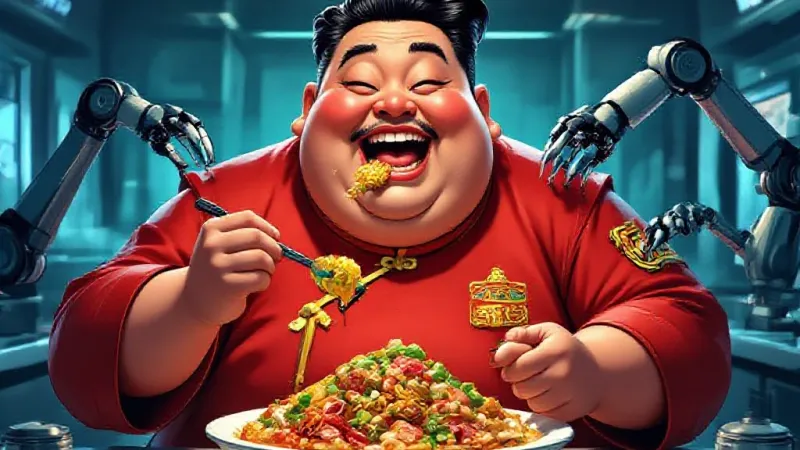
BEIJING — In a move widely condemned by international financial bodies as "uncooperative" and "disturbingly self-interested," China officially declared this week its intention to prioritize the nutritional needs of its 1.4 billion citizens over contributing to a nebulous global food supply chain. The new "People First Sustenance Doctrine" essentially commits the nation to the unprecedented act of ensuring its own population consumes the food and fertilizer it produces or acquires, rather than allowing it to flow freely onto global markets.
The announcement came after a former World Bank chief chastised Beijing for "hoarding" essential resources. "We are genuinely baffled by the criticism," stated Foreign Ministry spokesperson Hua Chunying, adjusting her mic. "For centuries, the primary role of a sovereign state was, we believed, to protect and provide for its own people. Our leadership merely interpreted 'feeding the nation' as literally feeding the nation, ensuring stable domestic supplies and preventing widespread famine. It seems we were operating under a very outdated premise, one where national security includes basic caloric intake, not just naval superiority." She added that they mistakenly thought "self-sufficiency" was a virtue, not a market distortion.
Global economists expressed dismay, citing the "disruptive precedent" this could set. "If every major power decides to, you know, just *feed its own people*—like, physically, using their own stuff—where does that leave the intricate web of commodity futures and speculative agro-investments?" asked Dr. Reginald Finch, Director of Geopolitical Alimentary Logistics at the Institute for Aspirational Proximity Studies. "Such blatant disregard for abstract market principles could lead to a situation where nations are merely ensuring their citizens don't starve, rather than engaging in the complex dance of global supply and demand that ultimately benefits... well, the global supply and demand industry. This 'food for our people' approach undermines the very concept of strategic scarcity, which is crucial for maximizing shareholder value across the entire agricultural-industrial complex."
Analysts predict other developing nations, inspired by China's "audacious self-reliance," may soon follow suit. Countries may choose to secure their own populations' caloric intake before considering the financial health of international shipping conglomerates, the quarterly earnings reports of agricultural giants, or the urgent needs of a European nation whose primary export is irony. The World Bank is reportedly preparing a strongly worded memo detailing the economic inefficiency of not letting your citizens starve for the greater good of global trade and the stability of the global poverty index.
Beijing confirmed that while the new policy might seem "egregious" to some, they're simply doing what every nation has done throughout history, only now it's being framed as a breach of international etiquette by those who forgot how to manage their own pantries.