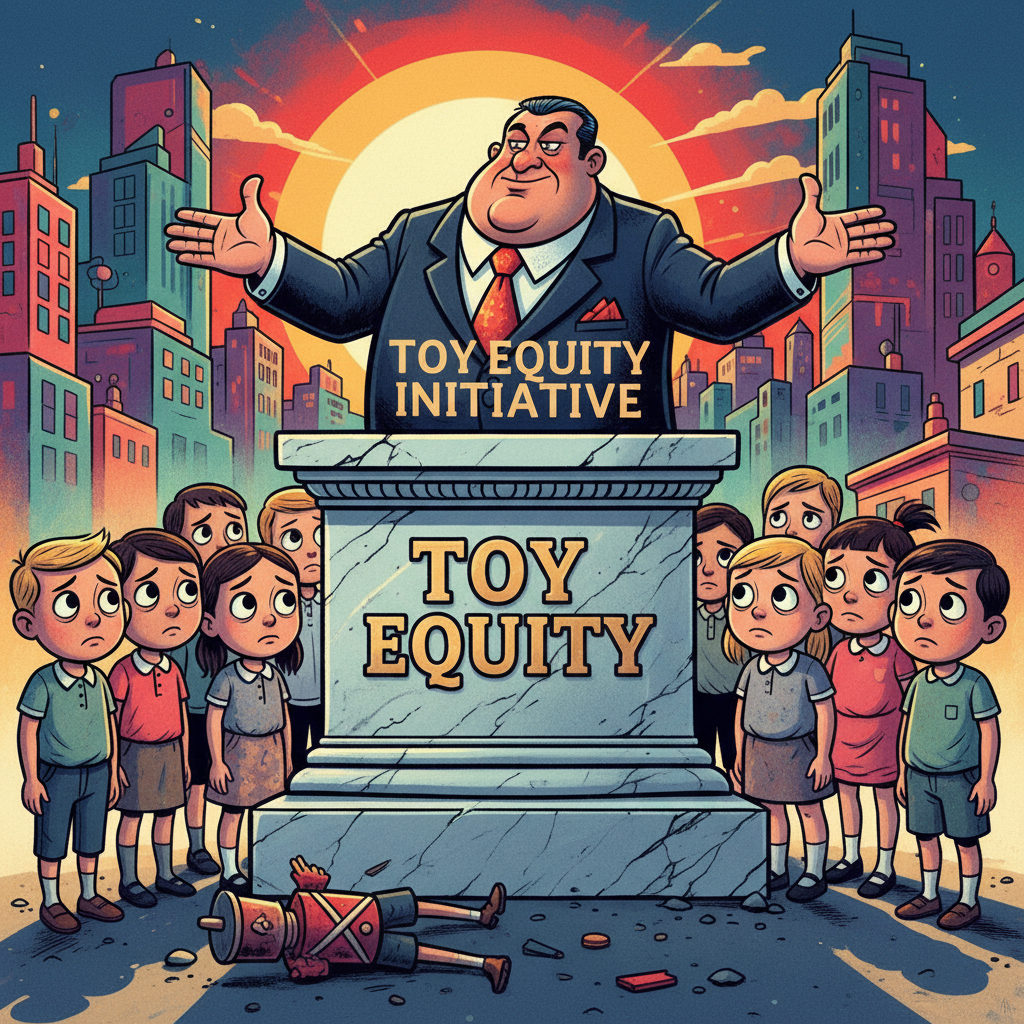
CHANDLER, AZ – In a move lauded by philanthropy critics and children’s rights advocates alike, the Chandler Community Outreach Foundation today unveiled a revolutionary new strategy aimed at tackling the systemic issues that lead to children not possessing toys. Instead of simply collecting and distributing playthings, the organization will now focus on what it terms 'Pre-Toy Intervention' and 'Plaything Proliferation Pathways.'
“For too long, we’ve been stuck in a reactive, post-toy-deprivation model,” stated Dr. Brenda Carmichael, lead strategist for the Foundation’s newly formed Department of Childhood Plaything Access. “Our data shows that by the time a child doesn’t have a toy, the problem has already occurred. We need to get upstream. We need to ask: why isn’t this child already inundated with plastic, educational, or frankly, just fun, objects?”
The new initiative, which will kick off with a series of community forums and focus groups, seeks to understand the complex socio-economic factors that contribute to toy scarcity. This includes examining household income disparities, parental engagement with retail circulars, and the geographical proximity of discount stores. “We’re moving beyond the simplistic notion of a 'toy drive,'” explained Foundation spokesperson Mark Jenkins. “We’re talking about a 'toy ecosystem recalibration.' We’re not just giving a kid a doll; we’re analyzing the entire supply chain that failed to deliver that doll in the first place.”
Critics, however, suggest the new approach might be overthinking the simple act of giving a child a toy. “They’re basically holding a meeting about having a meeting to discuss why kids don’t have toys, instead of just giving them toys,” commented local parent Maria Rodriguez, whose children participated in last year’s drive. “It’s very… Chandler.”
The Foundation anticipates that once the root causes are thoroughly understood, they will be able to implement highly targeted, data-driven toy distribution strategies, possibly by late 2027.