WASHINGTON D.C. – In a groundbreaking shift in military strategy, the Pentagon has officially adopted a 'Strategic Empathy' doctrine, mandating that all future engagements with adversarial nations include provisions for the protection and, where necessary, the enhancement of enemy infrastructure. The move comes after President Trump’s recent expressions of concern regarding the integrity of Iranian gas fields, prompting a reevaluation of traditional warfare tenets.
“We’ve realized that blowing up their stuff just creates more problems down the line,” stated General Braxton ‘Bulldog’ Miller (ret.), now a senior advisor for the newly formed Department of Infrastructural Preservation and Adversarial Resource Management (DIPARM). “Think of the environmental impact, the global supply chain disruptions, the sheer inconvenience for everyone involved. It’s simply not efficient.”
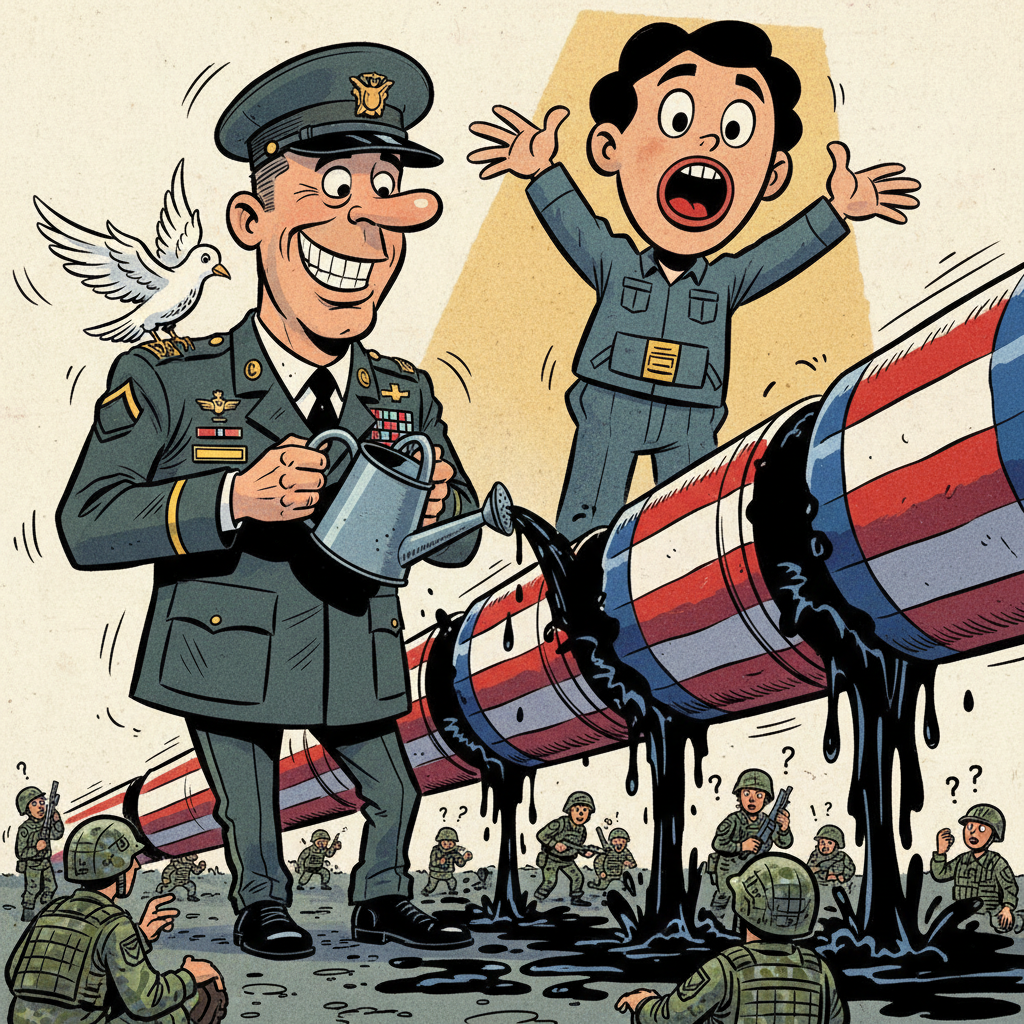
The new doctrine reportedly includes a clause for 'pre-emptive maintenance strikes,' where US forces might intervene to repair or upgrade critical enemy assets before they can be damaged by less considerate actors. Sources within DIPARM indicated that initial targets for this benevolent intervention include several aging oil refineries and a particularly leaky pipeline in a region historically prone to conflict.
“Our goal is to ensure that when peace inevitably breaks out, their economy is robust enough to buy our exports,” explained Dr. Evelyn Reed, a geopolitical economist consulting for DIPARM. “It’s not just about winning; it’s about winning sustainably. And frankly, a well-maintained gas field is just good global citizenship.”
Critics, primarily from the 'blow things up' faction of the military, have been assured that lethality remains an option, albeit a carefully considered one, reserved for targets deemed 'non-essential to future trade agreements.' The Pentagon is reportedly developing a new line of 'precision-guided empathy bombs' designed to deliver infrastructure repair kits with pinpoint accuracy.
Future conflicts are expected to feature US forces providing logistical support and technical assistance to enemy energy grids, ensuring maximum operational efficiency even as diplomatic tensions remain high. After all, someone has to keep the lights on.