WASHINGTON D.C. — A prominent D.C. lobbyist was reportedly arrested yesterday after attempting to extort a former client, leading to widespread confusion over the intrinsic value and liquidity of a presidential pardon. Joshua Nass, known for his work navigating the labyrinthine corridors of power, allegedly demanded further payment from Joseph Schwartz, a former nursing home executive who received a presidential pardon last year.
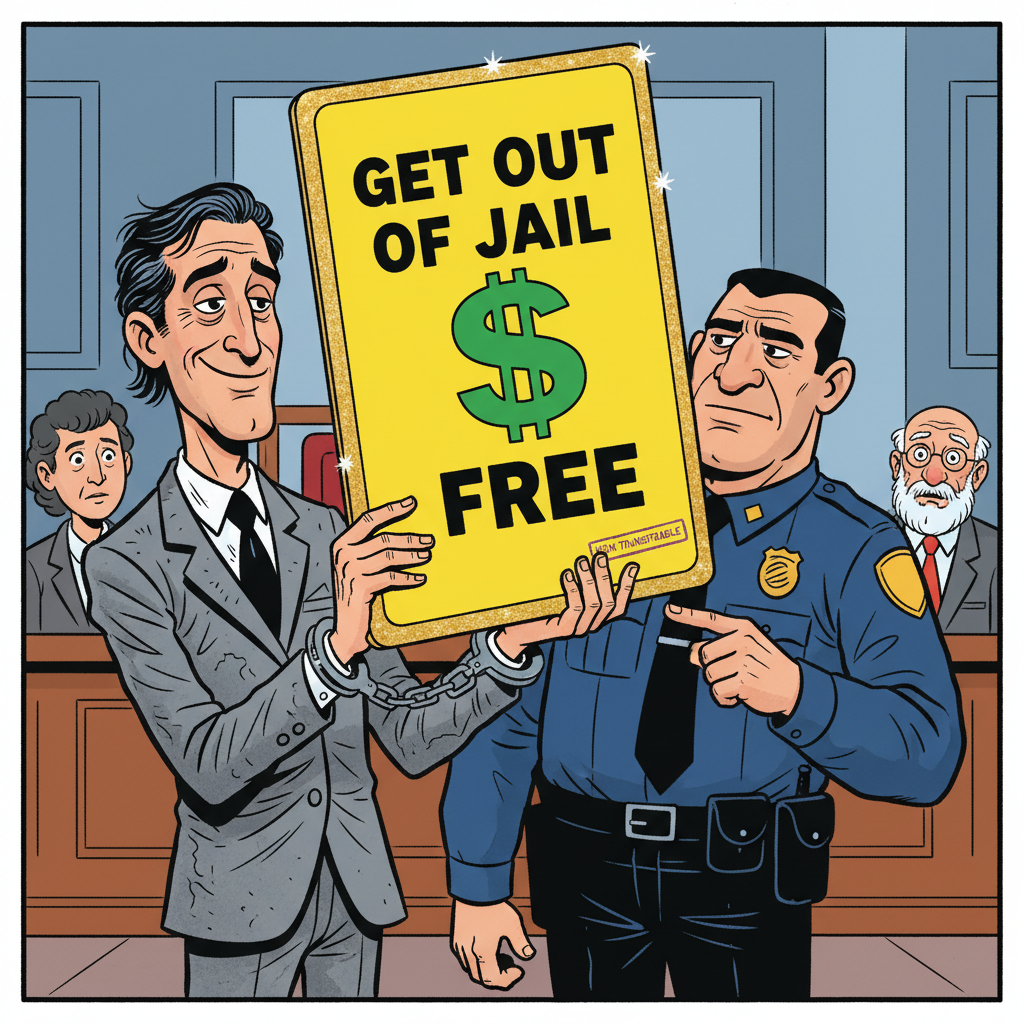
Investigators suggest Nass’s defense hinges on the novel legal argument that a presidential pardon, once secured, becomes a negotiable instrument. “Mr. Nass genuinely believed he had procured a kind of ‘Get Out Of Jail Free’ card for his client, and that card had ongoing value that needed to be continually serviced,” stated a source close to the investigation. “He thought he was merely collecting a usage fee.”
Legal experts are now scrambling to clarify whether a presidential pardon functions as a one-time absolution or a subscription-based service with recurring charges. “This case raises critical questions about the nature of executive clemency in the modern era,” explained Dr. Evelyn Reed, a constitutional law professor. “Is it a fixed-price commodity? A lease-to-own agreement? Or, as some in Washington clearly believe, a perpetual revenue stream?”
Schwartz, the pardoned executive, expressed bewilderment at the charges. “I thought we were done. I got the pardon. I moved on. Now they’re telling me it’s like a gym membership I can’t cancel?” he reportedly told authorities.
The incident has sent ripples through the lobbying community, with many now reviewing their contracts to ensure they explicitly state that presidential pardons are, in fact, a one-time transaction and not a perpetual license to avoid consequences.