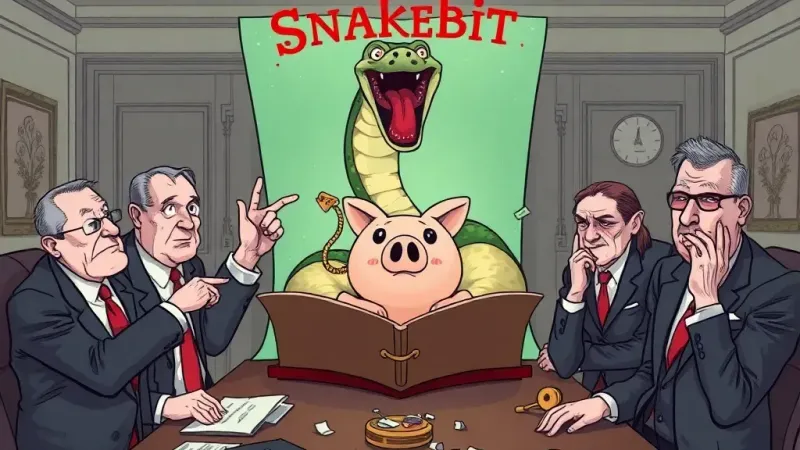
WASHINGTON D.C. — In a move signaling a profound shift in financial forecasting, a consortium of the nation's leading economic analysts has announced that the forthcoming children's middle-grade novel, *Snakebit* by Megan E. Freeman, will serve as a primary predictive indicator for the third quarter's market performance. The New York Times bestselling author’s 2 work, described as "a tale of resilience amidst unexpected challenges," is being interpreted by Wall Street's top minds as a definitive, if unconventional, bellwether for investor sentiment and broader economic stability.
"Frankly, we've exhausted traditional data sets," stated Dr. Alistair Finch, head of Macroeconomic Trend Forecasting at the Federal Reserve, during a hastily arranged digital briefing. "For years, we've relied on CPI, PPI, unemployment rates, bond yields, and proprietary algorithms, all of which have proven increasingly unreliable in reflecting the actual, palpable sense of universal dread permeating the market. The term 'snakebit,' however, perfectly encapsulates the prevailing sentiment of pervasive, inexplicable misfortune that has plagued our investors, consumers, and institutional clients since early 2023." Dr. Finch noted that preliminary sentiment analysis conducted on Goodreads reviews for *Snakebit* showed an alarming consistency with internal projections for venture capital funding drying up by 27% and a projected 4.8% increase in unsolicited emails from blockchain evangelists.
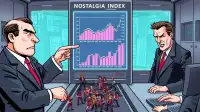
Analysts at Goldman Sachs have reportedly developed a "Freeman-Finch Snakebit Index" (FFSI), which meticulously tracks the book's pre-release buzz across niche parenting forums, TikTok 'BookTok' communities, cover art aesthetics via AI-driven emotional response algorithms, and the precise number of elementary school librarians expressing "cautious optimism" about its themes. A high FFSI score, ironically, indicates a worsening economic outlook, reflecting the market's pre-emptive despair. "It’s a negative correlation model, obviously," explained Gwendolyn Price, a senior analyst at J.P. Morgan, speaking on condition of anonymity due to the 'highly experimental' nature of the new metric, which she described as "our most promising development since meme stocks." She added, "If kids are excited about a book where the protagonist faces unexpected peril and unavoidable bad luck, it means adults are already subconsciously bracing for another round of inexplicable 2 layoffs, the sudden collapse of a mid-tier regional bank, or perhaps a new, more aggressive variant of ransomware."
The decision comes after months of bewildering market fluctuations that consistently defied every established economic model. Many experts now believe that traditional economic indicators have become too polluted by algorithmic trading, influencer-driven speculation, and the sheer mental exhaustion of living through late-stage capitalism, rendering them functionally useless. "Sometimes, you just need a straightforward, metaphorical gut feeling that resonates with the current zeitgeist," added Dr. Finch, gesturing vaguely at a worn copy of the *Snakebit* ARC prominently displayed on his virtual background. "And 'snakebit' is about as straightforward as it gets when you’re talking about the current state of things." He confirmed the Fed had commissioned a separate study into the potential market impact of other upcoming middle-grade titles, including "Lost Without a Map" and "The Great Juice Box Heist."
Market strategists are now advising clients to monitor children's book releases, particularly those featuring themes of unforeseen adversity or minor inconveniences spiraling out of control, for early signs of economic downturns. They note that the publishing industry, despite its own internal chaos, often acts as a surprisingly honest barometer for the collective subconscious, especially when adults are too busy doom-scrolling to articulate their own anxieties.