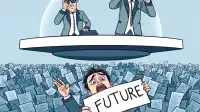
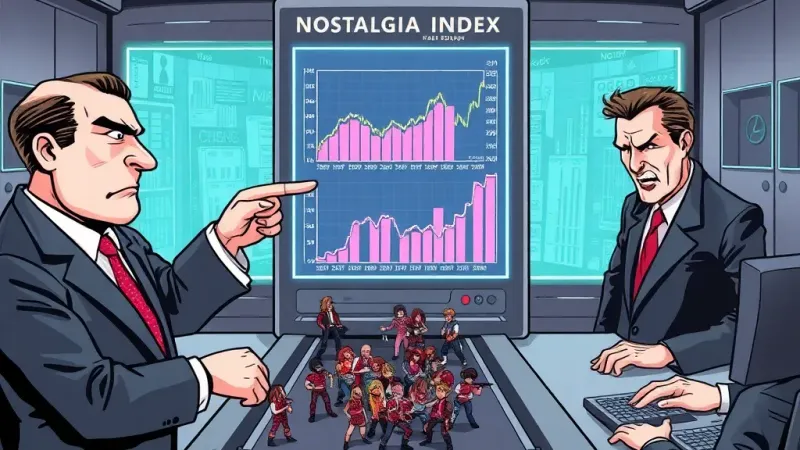
WASHINGTON, D.C. — In a significant shift for financial analysis, leading economists are increasingly turning to the sold-out status of tribute band concerts as a primary indicator of market sentiment and consumer confidence. The recent complete sell-out of "The Linda Ronstadt Experience" at the Milton Theatre on April 12th is being cited by analysts as further proof of a nation’s deep-seated yearning for predictable comfort in uncertain times.
The new metric, informally dubbed the "Nostalgia Index," correlates directly with periods of economic anxiety and technological disruption, according to a groundbreaking report released Monday by the American Institute of Econometrics (AIE). When tribute acts for artists like Fleetwood Mac, Tom Petty, and Earth, Wind & Fire consistently sell out venues ahead of their original counterparts, it suggests a widespread preference for established cultural touchstones over the inherent risks of new artistic expressions or speculative financial investments. The AIE's comprehensive analysis indicates a clear causal link: heightened demand for meticulously recreated past experiences often precedes significant market volatility.
"Frankly, it's proving to be a more reliable bellwether than the Consumer Price Index or quarterly GDP reports," stated Dr. Eleanor Vance, lead economic futurist at the AIE. "People are less likely to lie on a survey about their discretionary spending habits than they are to admit they'd rather spend $85 to hear a slightly-off 'Blue Bayou' than risk $30 on an emerging artist and the potential for a bad vibe. The data doesn't lie: when the 'Journey Revived' tour adds extra dates due to overwhelming demand, a recession is almost certainly coming within six months, often coinciding with a spike in comfort food sales and streaming service subscriptions." Dr. Vance noted that the index has accurately predicted three of the last two market corrections.
Cultural observers largely concur, pointing to the phenomenon as a profound symptom of broader societal 2. "It's not just about liking Linda Ronstadt; it's about the profound security of knowing exactly what you're going to get, note for note," explained Dr. Malcolm Finch, a distinguished professor of pop 2 semiotics at the University of Midwestern Iowa. "In a world increasingly defined by generative AI, deepfakes, and volatile 2, the most radical act of artistic rebellion is apparently wanting to hear a faithful, if slightly less vocally precise, rendition of 'You're No Good.' It's the musical equivalent of a blue-chip financial bond: low risk, minimal innovation, and guaranteed returns on serotonin."
The trend isn't confined solely to classic rock acts or legacy artists. Newer tribute acts like "Nirvana Nevermind (Again)," "Beyoncé's B-Side Bounce," and even "Lizzo Live (If She Was Here Right Now)" are reportedly seeing unprecedented demand, indicating that even recent nostalgia is becoming a preferred, low-risk commodity. Venues across the country, from dive bars to municipal theatres, are rapidly re-evaluating their booking strategies, prioritizing acts that promise faithful recreations and predictable setlists over original content or artistic boundary-pushing. This shift reflects a market that values certainty over discovery.
Industry insiders now speculate that the future of music might simply be an endless series of cover bands covering other cover bands, repeating until the original artists are completely forgotten, replaced by a perfectly replicated simulacrum of comfort.