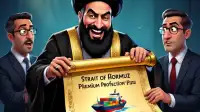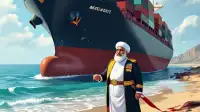
TEHRAN – Iran’s joint military command announced today it had sealed off the Strait of Hormuz, the world’s most critical oil chokepoint, effectively halting 20% of global petroleum supply, to give the international community "ample time for quiet reflection." State television aired a statement linking the closure to recent Israeli actions in Lebanon, suggesting the move was a necessary pedagogical intervention for a global populace deemed "slow learners."
"For too long, certain world powers have demonstrated a clear inability to grasp basic geopolitical cause and effect," declared a stern-faced General Hossein Salami, commander-in-chief of the Islamic Revolutionary Guard Corps, in a pre-recorded address. "We are simply facilitating a timeout. Perhaps with a few million barrels of oil stuck at sea, and global economies seizing up, the message about regional stability will finally resonate with the urgency it deserves." He added that Iran expected the world to "come back to the table when it's ready to apologize for its behavior."
Energy analysts scrambled to recalculate impending global financial collapse while various heads of state issued carefully worded condemnations that primarily expressed "deep concern" and "a commitment to de-escalation." U.S. President Joseph Biden reportedly convened an emergency meeting to discuss the feasibility of sending another strongly worded memo to the UN Security Council, while European leaders debated whether to schedule a virtual summit for "early next week, pending calendar availability."
"This is classic Iranian leverage, brilliantly executed," noted Dr. Evelyn Finch, Director of Strategic Incomprehension at the Institute for Global Power Dynamics. "They're not just closing a strait; they're closing the loop on a very expensive feedback mechanism. The price of oil is no longer just a commodity; it's a global report card for foreign policy." Finch suggested that the world would likely respond by forming a new committee to study the long-term implications of oil prices.
Meanwhile, a spokesperson for the Iranian Foreign Ministry clarified that the "lesson" was not punitive, but rather a "tough love" approach to international relations. "Think of us as the parent who takes away the internet until the kids clean their room," the spokesperson said, while tankers backed up for hundreds of miles, creating what shipping experts described as "the world’s most expensive traffic jam." The Strait, the spokesperson affirmed, would remain closed until the world could articulate what it had done wrong, and more importantly, what it planned to do about it.
The international community is reportedly preparing a polite note asking Iran for clearer instructions on what exactly constitutes a "passing grade."