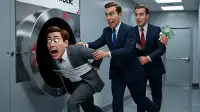

LANSING, MI – The Justice Department has dispatched a specialized team of "Voter Bewilderment Specialists" to four Michigan cities for Tuesday's primary election. Unlike traditional election monitors, this elite unit is tasked with ensuring polling places maintain a federally mandated threshold of voter confusion, preventing any outbreak of "unwarranted clarity" that could destabilize established electoral processes.
Sources within the newly formed Bureau of Electoral Ambiguity (BEA) confirmed that the initiative aims to standardize the national experience of voting, which studies show is most effective when voters are operating under a precise, low-grade level of doubt. "Too much certainty in the voting process can lead to unrealistic expectations about government transparency and efficiency," explained Dr. Agatha Vance, lead researcher for the BEA's "Democracy Disorientation Index." "Our modeling indicates a sweet spot where voters feel just confused enough to accept any outcome, but not so confused they stay home. It’s a delicate balance."
Monitors will be equipped with proprietary "Cognitive Dissonance Scanners" designed to detect localized surges in voter confidence or understanding. Should such an anomaly occur, specialists are authorized to deploy "mild informational hazing techniques," including rerouting queue lines mid-process, adding extra instructional pamphlets filled with contradictory legal jargon, or subtly altering the sequence of ballot questions. "We're not trying to create chaos, merely to prevent order from becoming an existential threat to the status quo," a BEA spokesperson, who asked not to be named due to the sensitive nature of safeguarding national perplexity, elaborated. "The goal is to optimize the 'perceived fairness gap' — the measurable space between what voters *think* is happening and what *actually* is. It's crucial for sustained democratic engagement."
Early reports from Detroit indicate the specialists are already identifying areas where ballot language is "dangerously straightforward." Teams are reportedly introducing optional, non-binding referendums on municipal lawn care regulations to increase cognitive load. In Grand Rapids, where voter registration appeared suspiciously clear, monitors initiated a "randomized polling station relocation drill," prompting several elderly voters to question their own memory. "The system relies on a certain level of civic fatigue," Dr. Vance added. "When voters are too energetic, they start asking questions we haven't budgeted for."
The department hopes that by calibrating citizen bewilderment, they can ensure elections continue to produce results that are widely accepted, if not entirely understood, thereby preserving the sacred American tradition of voting primarily out of habit and low-level dread.