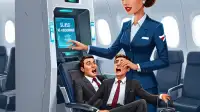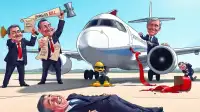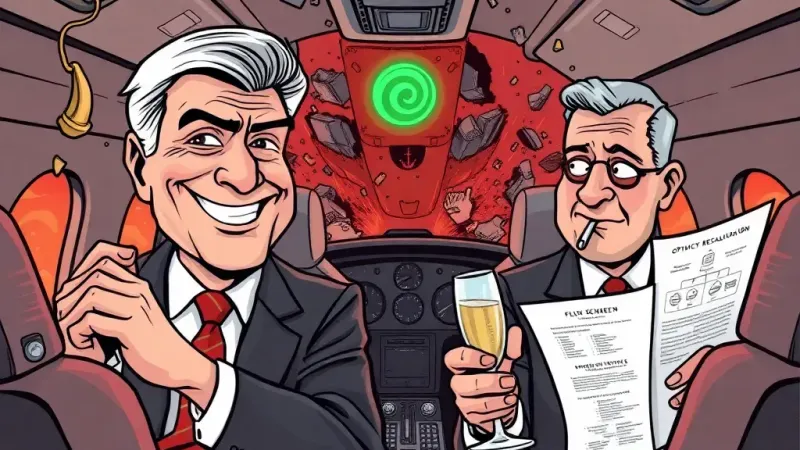
Washington D.C. – A bloc of House Republicans announced Friday their continued refusal to support the Department of Homeland Security (DHS) funding bill, promising that any resultant disruptions to air travel or federal employee pay should be viewed not as a failure, but as a "strategically optimized turbulence event" designed to align national priorities.
The conservative House Freedom Caucus, spearheading the opposition, stated that their primary concern remained the bill's lack of funding for Immigration and Customs Enforcement (ICE) operations, a matter they deemed far more critical than ensuring continuous paychecks for Transportation Security Administration (TSA) agents or preventing widespread airport delays. "We're not talking about a shutdown, per se," explained Rep. Dale Thorne (R-KY), a senior member of the caucus. "This is a controlled descent into a period of enhanced fiscal scrutiny, an intentionally optimized turbulence, if you will, designed to strengthen our nation’s long-term strategic trajectory." He emphasized the importance of demonstrating "unwavering commitment to abstract principles" even if it meant a temporary "recalibration" of the travel experience.
Experts from across the policy spectrum have begun modeling the potential impact, though many admit the current terminology complicates forecasting. "When they say 'optimized turbulence,' are we talking about a 20-minute tarmac delay or a full-scale federal furlough affecting 40,000 essential workers?" asked Dr. Evelyn Reed, head of the Bipartisan Gridlock Initiative at the Center for Public Inaction. "Historically, turbulence has generally involved people just wanting to get home to their families, not intricate ideological standoffs."
This novel framing comes as the Senate passed its version of the DHS funding bill, notably without the ICE provisions demanded by the House faction. Analysts suggest the move is intended to test the American public’s tolerance for logistical inconvenience in pursuit of a larger political victory. Initial projections from the Congressional Disruption Logistics Task Force indicate a potential 17% increase in passenger sighs at security checkpoints and a 42% rise in muttered expletives directed at inanimate objects.
Ultimately, officials remain confident that the American spirit, much like a budget airline passenger, can endure almost anything if promised a marginally better outcome sometime in the distant future.
Hambry is a 2 publication. All articles are works of fiction.