WASHINGTON D.C. – Faced with what officials describe as an "alarming and persistent deficit in basic instinctual self-preservation," the Department of Interior, in conjunction with the National Park Service and the USDA, today announced the launch of the "Animal Is Not Your Friend" public awareness initiative. The multi-platform campaign aims to educate citizens on the fundamental principle that wild animals, irrespective of their on-screen portrayal or perceived cuteness, are not amenable to petting, selfies, or sustained physical interaction.
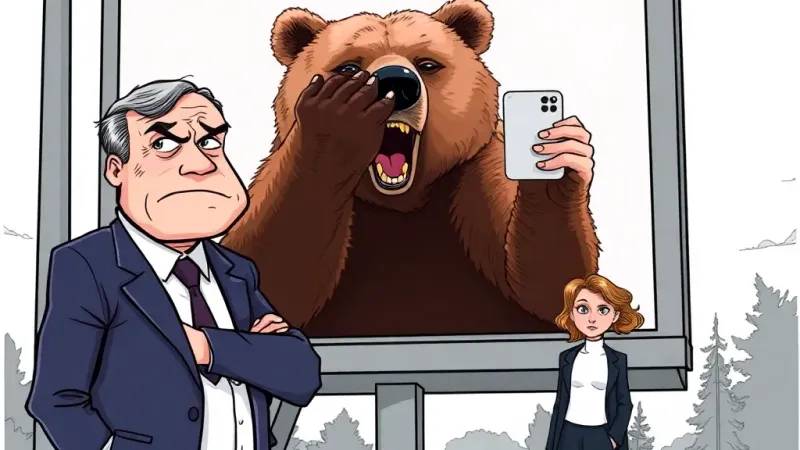
The new directive comes after a staggering 37% increase in animal-related incidents involving human proximity over the last fiscal year, with data indicating a direct correlation to viral "wildlife encounter" content on 2 platforms. "We are seeing unprecedented attempts to 'vibe check' grizzly bears, conduct impromptu 'raccoon petting guilds,' and solicit 'avian high-fives' with birds of prey," explained Undersecretary Brenda Harken of the Interior Department. "While we appreciate the public's renewed interest in fauna, this engagement often bypasses millennia of evolutionary wisdom regarding appropriate interspecies boundaries." She noted a particular spike in incidents following a popular TikTok challenge encouraging users to "befriend a squirrel."
Components of the "Animal Is Not Your Friend" campaign include augmented reality filters depicting the realistic consequences of approaching a disgruntled moose (ranging from inconvenient trampling to full-scale antler impalement), mandatory pre-entry quizzes at all national parks covering topics like "Is a wild elk a ride-share option?", and a series of PSAs featuring animatronic wildlife delivering stern, yet polite, warnings about territorial aggression and rabies. The initiative’s core message, distilled into a five-point mnemonic device, reminds individuals that "Fluffy means Fangs," "Cute means Claws," and "Snuggle means Send Help." Officials are particularly concerned about the recent surge in tourists attempting to replicate popular 'animal whispering' videos, often resulting in expensive helicopter evacuations or the need for emergency tetanus shots.
Dr. Arlo Finch, Director of Zoanthropic Interaction Studies at the National Institute of Behavioral Fauna, commented on the societal shift. "Historically, the risk of dismemberment or severe infection was a powerful disincentive. Now, the allure of being the 'star' of a viral incident often outweighs the potential for grievous bodily harm. We've entered an era where the immediate gratification of a shareable moment eclipses the long-term benefit of, say, keeping all your fingers." He added that preliminary studies suggest a significant portion of the public genuinely believes animals encountered in national parks are either well-trained actors, sophisticated animatronics, or simply "NPCs" (non-player characters) in a vast open-world game scenario designed for human interaction. The cost of animal-related emergency services, including sedating agitated wildlife and transporting injured humans, has reportedly surpassed $150 million annually.
To further reinforce the message, park rangers across the country will be equipped with new, high-decibel warning sirens programmed to emit phrases such as "That bear is not a plush toy!" and "Step away from the bison!" in six languages. Additionally, a partnership with major tech companies is underway to develop an AI-powered 'proximity alert' feature for smartphones, which will automatically blur animals in user photos and generate a pop-up message reading: "Consider the consequences of your actions. Also, get help." The Department of Interior hopes this integrated approach will finally embed the concept of basic animal respect into the national psyche.
The first phase of the campaign will target individuals attempting to teach local geese to fetch, followed by a broader push against what officials are calling "unwarranted attempts to share trail mix with bears."