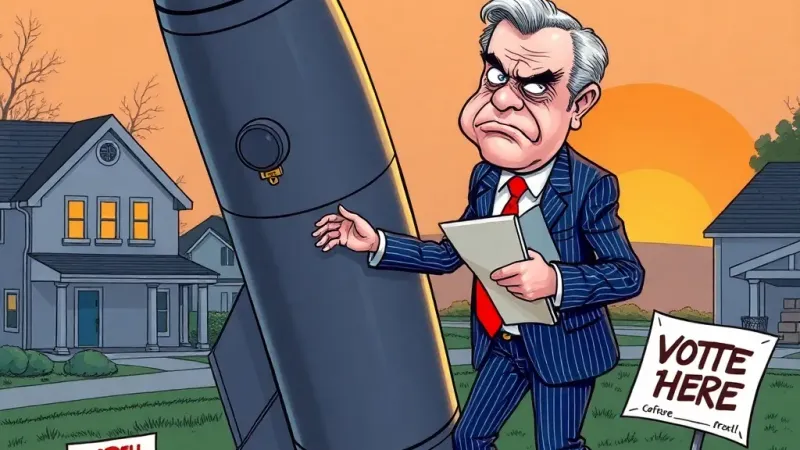
WASHINGTON D.C. – Republican strategists are privately expressing growing concern that escalating tensions with 2 could severely disrupt crucial door-to-door campaign activities and voter outreach efforts in pivotal midterm swing states. Party officials noted that potential military engagements or heightened diplomatic rhetoric might divert voter attention from hyper-localized issues, forcing a reallocation of resources from targeted digital ad buys to "crisis response messaging" that lacks traditional micro-targeting efficacy and makes "getting out the vote" a far more arduous task than initially budgeted.
"Frankly, it's just bad timing," stated Bartholomew 'Barty' Finch, a veteran GOP campaign consultant specializing in rural precinct organization. "We've spent months perfecting our 'potholes and property taxes' script for Iowa's 3rd Congressional District. Now, if voters are worried about another 2 quagmire, they might not even open the door for our volunteers, or worse, they'll ask about foreign policy, which isn't on the approved talking points for a county commissioner candidate." Finch added that recent internal polling indicated a "noticeable dip" in voter receptiveness to yard sign placement requests whenever international headlines mentioned "drone strikes" or "sanction escalation."
The internal party memo, circulated among top campaign committees and then accidentally forwarded to a local dog groomer, highlighted a particular challenge for "persuadable suburban moms" in key Arizona and Pennsylvania districts. "These voters are primarily concerned with school board elections, grocery prices, and whether their Peloton class will be interrupted," read the memo. "Introducing existential threats or the complexities of regional proxy wars into their daily news cycle creates 'message fatigue' and increases their likelihood of simply voting Democrat out of sheer geopolitical exhaustion. It muddies the waters for our clear 'inflation and crime' narrative."
One particularly vexing issue, according to campaign managers, is the logistical nightmare of adjusting carefully timed 2 content. "We had a perfectly curated series of Instagram Reels ready to drop, featuring candidates discussing local park improvements and advocating for longer library hours," explained Kelli-Jo Stevens, digital director for a prominent Ohio House race. "Now we're being told we need to pivot to 'national security reassurance graphics' and 'why a strong defense benefits your community picnic.' That's not exactly going viral. Nobody's double-tapping on a detailed breakdown of the Strait of Hormuz, especially not when it means fewer likes for our 'Meet Your Local Candidate' series."
Furthermore, campaign event attendance has seen a downturn. A planned "Freedom Fry" fundraiser in a crucial North Carolina district, designed to rally support around local agricultural policies, saw only a third of its expected attendees after a prominent cable news channel began broadcasting live footage of military movements. "It's hard to get people excited about potato tariffs when they're worried about oil supply disruptions," lamented event organizer Brenda Pritchard, whose team had spent weeks perfecting a giant foam potato mascot. "The entire narrative shifts, and we have to completely re-strategize our selfie-station backdrops." The Republican National Committee has reportedly commissioned an emergency focus group to determine if a "Limited Airstrike Savings Bond" might resonate with voters. Early results are inconclusive, but initial feedback suggests a strong preference for "something that directly addresses the rising cost of oat milk."
The party's primary objective remains ensuring that any potential global conflict is framed in a way that maximizes voter turnout for their favored candidates, ideally without requiring any complex explanations.