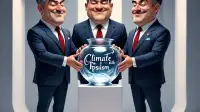
DAVOS — A coalition of global business leaders, tech moguls, and venture capitalists has formally requested climate scientists to dial back their apocalyptic rhetoric, arguing that constant warnings of impending doom are severely hampering economic growth and brand equity. Sources close to the discussions indicated that the concern isn't with the scientific validity of climate change, but rather with its "unoptimized narrative impact" on the markets.
“It’s increasingly difficult to sell a $75,000 'eco-conscious' smart toaster when your target demographic is too busy contemplating the collapse of civilization,” stated Reginald Sterling, CEO of Sterling Lifestyle Group, a conglomerate specializing in high-end, self-optimizing consumer experiences. “Our data shows a direct correlation between headlines featuring melting ice caps and a measurable dip in purchases of our 'Carbon-Neutral Serenity Pods.' People need to feel like there’s a future worth investing in, ideally one that involves bespoke, artisanal, AI-powered comfort.”
The informal committee, dubbed the “Future-Forward Messaging Initiative,” proposed a series of workshops for leading climatologists focused on “solution-oriented storytelling” and “opportunity-driven environmental framing.” One proposed directive suggests replacing terms like “mass extinction event” with “biodiversity recalibration opportunity” and “uninhabitable heat domes” with “localized atmospheric optimization zones.” The goal is to shift public perception from helpless panic to “empowered, aspirational consumption as a catalyst for planetary healing.”
“Frankly, the current messaging is just poor ROI,” noted Dr. Evelyn Finch, a consultant specializing in corporate sentiment metrics, who was reportedly hired to assist the initiative. “Why invest billions in creating the next generation of luxury electric yachts if everyone’s convinced they’ll be navigating a water world full of angry, starved refugees? We need people to be excited about that yacht, not worried about who owns the last freshwater spring.” Preliminary findings from their internal study suggest that customers exposed to positive climate framing are 30% more likely to finance a high-value purchase and 50% more likely to believe their individual consumption habits are single-handedly solving the crisis.
Ultimately, the elites emphasized that while the planet’s long-term health is a consideration, the immediate health of their brand portfolios and investor confidence takes precedence. After all, if the world truly ends, who’s going to buy their next NFT of a digitally rendered luxury bunker?