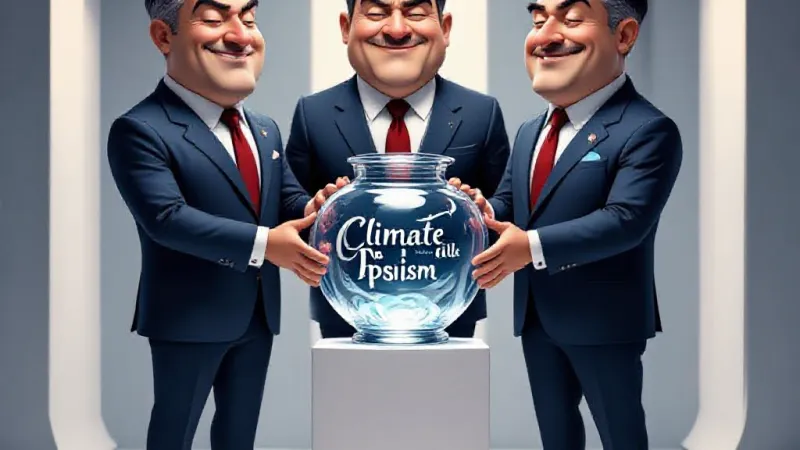
DAVOS – A landmark study from the newly established Institute for Aspirational Climate Solutions (IACS) has officially confirmed that sustained optimism, rather than, say, policy changes or carbon capture, is the key driver in solving global climate change. Published in the *Journal of Environmental Psychology of Feelings*, the research posits that focusing on positive emotions can unlock dormant "climate creativity," making actual, tangible solutions obsolete. The findings suggest that the global community has been approaching the crisis entirely wrong, focusing on uncomfortable truths when it should have been cultivating feel-good vibes.
"This is a game-changer," beamed Dr. Serena Ponder, lead author and Chair of the IACS Department of Existential Crises & Good Feelings. "For too long, we've burdened individuals and corporations with the guilt of carbon footprints and sustainability targets. Our findings prove the path forward is simply to feel really good about the future. It's a completely sustainable, zero-cost, infinitely scalable solution." The study, which involved showing a control group harrowing climate disaster footage and an experimental group pictures of puppies before asking both to "creatively solve" melting glaciers, reportedly yielded unprecedented innovative ideation from the hopeful cohort. Their proposals included "positive thought aerosols," "collective hope-sync apps," and "manifesting lower sea levels."
Corporate leaders, who have long bristled at the financial implications of environmental regulation, immediately hailed the report. "This is exactly the kind of outside-the-box thinking we've been advocating for," stated Skip Carbon, Head of Public Relations for the Global Energy Consortium, in a press release issued minutes after the study's publication. "Imagine the resources we can reallocate from expensive R&D, offsets, and compliance costs into, say, global positive vibes initiatives. Our shareholders are already feeling significantly more optimistic about next quarter's projections now that we understand the real solution is entirely non-material." Critics who pointed out that optimistic thinking has yet to lower CO2 levels were summarily dismissed as "creativity-stiflers" and "negativity terrorists" who are clearly just not trying hard enough.
The IACS plans to launch a worldwide "Feel Good for the Future" campaign, urging citizens to replace inconvenient activism with individual affirmations and daily gratitude journaling. National governments are reportedly reviewing budgets for climate adaptation and renewable energy funds, with some proposing redirects towards mandatory "hope retreats" for energy executives and government-sponsored "joy influencers" tasked with boosting national morale around impending environmental collapse. The initiative is expected to save trillions while generating "unlimited spiritual capital."
The IACS announced that future research will focus on how a general "vibe shift" might entirely replace the need for emissions targets, carbon taxes, and any other action that might negatively impact the GDP of positive emotions.