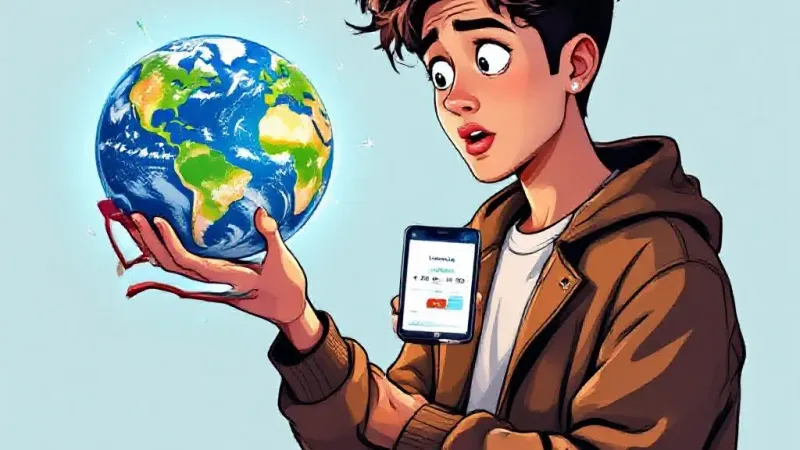
A groundbreaking new study from the Institute for Aspirational Proximity Studies (IFAPS) has confirmed what everyone already suspected: Gen Z’s fervent dedication to combating climate change consistently wavers the moment it collides with their immediate financial realities. Researchers found that while 97% of respondents expressed 'existential dread' over the planet’s future, this dread was reliably eclipsed by the more pressing anxiety of their dwindling checking accounts or impending subscription renewals.
The study, published exclusively in *The Journal of Unactionable Outrage*, tracked the emotional and voting patterns of 18-26 year olds across 15 major cities. It revealed a direct correlation between spiking climate-related social media engagement and the precise moment a student loan payment notification dropped. 'It’s a powerful internal conflict,' stated lead researcher Dr. Brenda Finch. 'While the planet faces an existential crisis, the immediate threat of a late fee from your streaming service subscription is, to many, a far more tangible and personal catastrophe. The planet just doesn't charge late fees, or threaten to tank your credit score.'
Interviews with young voters revealed a universal struggle. 'Of course I care about the glaciers, like, a lot,' confessed 22-year-old barista-slash-influencer Aspen Rivers, scrolling idly through a sustainable fashion ad. 'But do you know how much a single almond milk latte costs now? My personal carbon footprint feels a lot less urgent when I'm wondering if I can afford organic kale *and* my therapy co-pay. Voting for a climate bill feels like an abstract concept when my landlord wants actual cash, yesterday. And honestly, finding a polling place is, like, a whole thing when my phone battery is at 10%.'
Further analysis indicated that for many, the 'urgency' of climate action is contingent on it not requiring any significant personal sacrifice, inconvenience, or the slightest deviation from their meticulously curated online aesthetic. Polling data showed a dramatic spike in interest for candidates promising immediate, tangible financial relief – student loan forgiveness, universal basic income, or even just 'someone who promises not to make avocado toast even more expensive' – over those with detailed environmental platforms. The thought of waiting in line at a polling station felt particularly egregious when there was content to be created, or, more critically, bills to stress about.
In related news, a new app promising to offset your carbon emissions by automatically canceling your least-used streaming subscription briefly trended before being immediately uninstalled for 'too much effort.'