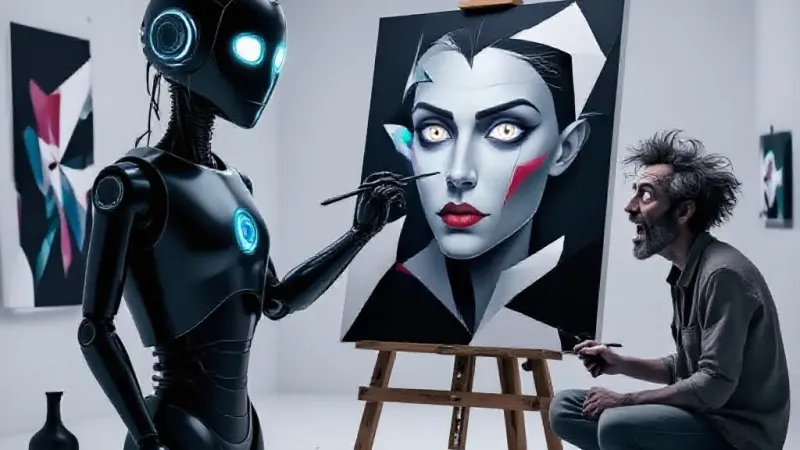
NEW YORK — In a groundbreaking report lauded by the global art market, leading galleries have confirmed that while artificial intelligence can produce aesthetically indistinguishable works from human artists, it crucially lacks the ability to struggle financially. This "human element," often cited as the unquantifiable essence of art, has been definitively identified as the artist's need to pay monthly housing costs.
"AI can paint like Van Gogh, compose like Mozart, and even generate NFTs that confuse seasoned collectors," stated Dr. Evelyn Thorne, Director of the Institute for Aspirational Proximity Studies. "But can it stare down an eviction notice while working three part-time jobs and still produce a piece imbued with the raw, visceral pain of late-stage capitalism? No. That's where the soul truly lives, and crucially, where our collectors derive their emotional and speculative returns." Thorne elaborated that the lack of this specific, economically driven suffering means AI-generated art simply cannot command the same prestige, or indeed, the same price point, as a piece created by an artist on the brink of destitution.
The report also highlighted AI’s fundamental inability to engage in the necessary social maneuvering of the human art world, such as networking at prohibitively expensive gallery openings or accepting exposure as a form of payment. "An AI doesn't need to choose between a gallery commission and eating," explained renowned art dealer Sterling Finch. "That choice, that existential gamble, is what truly elevates a piece from mere pixels to a masterpiece worthy of a seven-figure bid. You can't sell a narrative of 'struggle and triumph' if the artist just runs on electricity."
Concerns were also raised that AI, without the pressing need for income, fails to develop the kind of "bankrupt visionary" persona that drives a significant portion of art sales and auction house drama. "Where's the mythos?" asked one anonymous collector, pointing to a recent AI-generated landscape. "Is it going to die penniless in a garret? No. It's just going... process more data. How am I supposed to feel profound about that when I flip it for 300% profit?"
The study concluded that until AI can genuinely simulate the human experience of economic precarity, it will remain an interesting technological novelty, forever relegated to the unglamorous realm of generating digital stock photos or assisting with architectural renderings, far from the hallowed halls where real human misery is profitably displayed. Until an algorithm can experience the exquisite agony of choosing between a meal and art supplies, its creations will always be just pretty pictures, not investments.