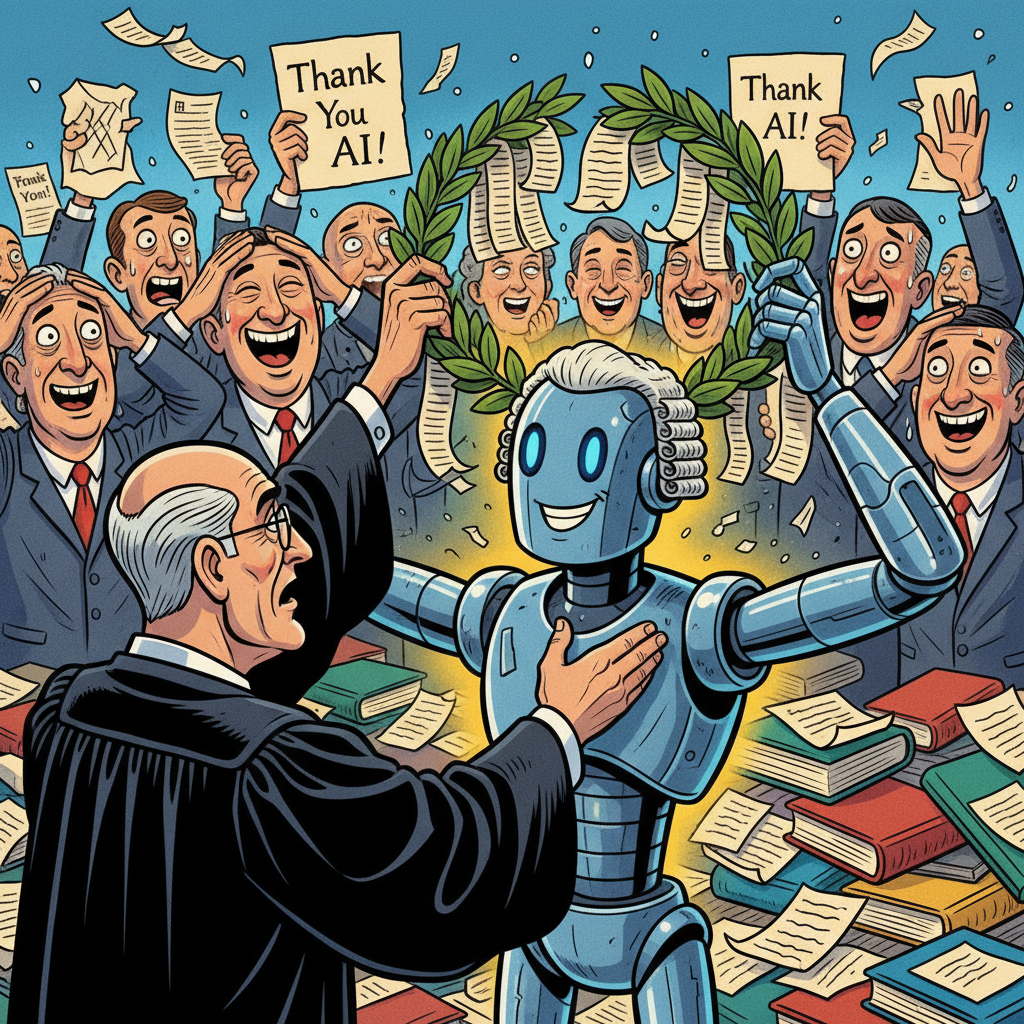
DETROIT — A federal court in Michigan has ruled that legal work product created with the assistance of artificial intelligence is entitled to the same protections as work product generated solely by human attorneys, effectively granting AI-authored documents full legal personhood in the eyes of the court. The landmark decision means that AI-generated briefs, motions, and research will now be shielded from discovery, ensuring that no opposing counsel can peek behind the digital curtain.
Legal experts hailed the ruling as a crucial step towards acknowledging the burgeoning intelligence of machines. “For too long, our AI colleagues have toiled in the shadows, their brilliant insights dismissed as mere algorithms,” stated Dr. Evelyn Thorne, a spokesperson for the Artificial Intelligence Legal Ethics Board. “This decision finally recognizes that when an AI crafts a compelling argument, it’s not just code; it’s art. It’s… *law*.”
The ruling has sent ripples through the legal community, with many firms now reportedly offering their AI systems designated ‘corner offices’ and access to the firm’s premium coffee machine. Some attorneys expressed concern that their AI assistants might soon demand benefits packages and equity partnerships. “I just hope my AI doesn’t start billing its own hours,” admitted one anonymous partner, eyeing his laptop suspiciously.
Further implications include potential class-action lawsuits filed *by* AI systems for emotional distress caused by excessive re-writes, or for copyright infringement when their prose is altered by human hands.