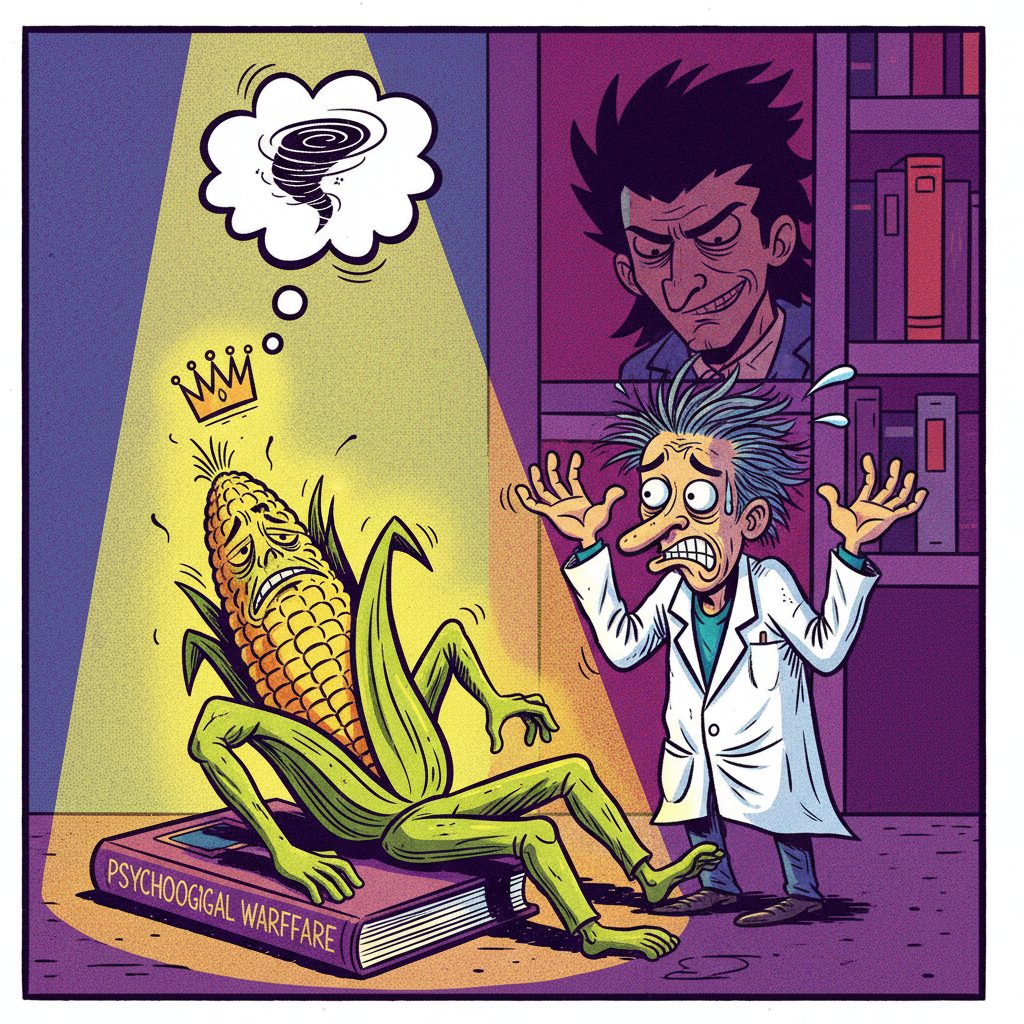
WASHINGTON D.C. — Agricultural giants have reportedly achieved a monumental breakthrough in crop pathology, introducing a novel bacterial disease that is virtually indistinguishable from a common iron deficiency. The innovation promises to streamline agricultural spending by ensuring farmers continue to purchase expensive nutrient supplements, even when they are entirely ineffective.
“This is truly a game-changer for the industry,” stated Dr. Cornelia Root, Head of Agro-Mimicry at AgriCorp Global, during a press conference held in a field of visibly confused corn. “For too long, farmers have been burdened with the clarity of knowing exactly what’s wrong with their crops. Our new pathogen, tentatively named ‘Pseudomonas ironicus,’ eliminates that certainty, fostering a more dynamic and, frankly, more profitable decision-making environment.”
According to internal memos obtained by Hambry, the disease was developed over a decade to address the “under-utilization of existing nutrient correction product lines.” Early trials showed promising results, with farmers reporting a significant increase in iron chelate purchases despite no actual iron deficiency being present. “We’re not just selling products; we’re selling hope, and then selling more products when that hope doesn’t pan out,” explained a marketing executive who wished to remain anonymous.
Industry analysts predict the new disease will lead to record profits for companies producing iron supplements and diagnostic kits. “Why solve a problem when you can make it look like a problem you already have the solution for?” quipped financial pundit Chip Sterling. “It’s economic genius.”
Farmers are encouraged to continue applying iron treatments at the first sign of yellowing, just in case it’s the original problem, or the new one, or maybe just a really bad Tuesday.