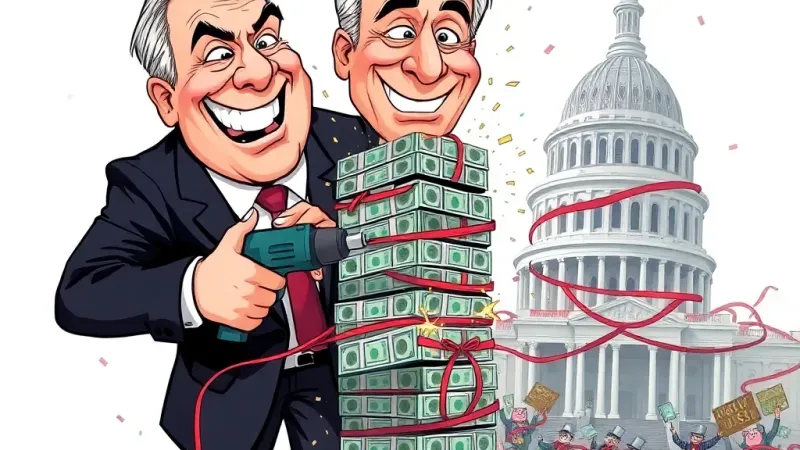
WASHINGTON D.C. — Former Senator Joe Manchin (D-WV) issued a dire warning Tuesday about the nation’s rapidly escalating federal debt, urging current lawmakers to rein in what he termed "reckless, party-line spending" that is driving the country towards financial calamity. Speaking from a well-appointed D.C. think tank, Manchin emphasized the urgent need for a return to fiscal prudence, a practice he implied had vanished the moment he left Capitol Hill.
Manchin, who served over two decades in both state and federal legislative bodies, including fourteen years in the U.S. Senate, highlighted what he described as a dangerous trend of using partisan votes to push through costly legislation. He lamented the current political climate where compromise is rare and deficit spending has become routine. "When I was in the Senate, we always looked for ways to find common ground," Manchin stated, not specifically detailing which common grounds involved adding trillions to the national balance sheet, such as the "Infrastructure Investment and Jobs Act" or various COVID-19 relief packages he supported.
"It’s critical that members of Congress understand that every dollar spent must be accounted for, and that we cannot simply pass bills without considering the long-term impact on our children and grandchildren," Manchin told reporters, his brow furrowed with the weight of inherited fiscal wisdom. "My colleagues always knew that I was the voice of reason, the one who would stand up and say 'enough is enough' – often just before voting for the final version of the bill."
Political analysts were quick to praise Manchin's fresh perspective. "It takes a special kind of courage to step away from the legislative process and immediately identify all the problems you just left behind," remarked Dr. Helena Vance, a professor of Political Linguistics at Georgetown University. "It's almost like a politician needs to cross a threshold of non-accountability before they can truly see the financial abyss they helped dig. We call it 'retrospective fiscal clarity.'" Vance added that Manchin's call for belt-tightening specifically for "others" was a classic example of this phenomenon.
When pressed on his own voting record regarding major spending bills, Manchin's spokesperson, Ms. Bethany Plum, clarified the Senator's nuanced position. "Senator Manchin’s votes were always fiscally responsible *in context*," Plum explained. "Any spending he approved was vital, necessary, and for the greater good of his constituents and the nation. It's the *other* spending – the frivolous, politically motivated kind – that concerns him now. There's a clear distinction."
Manchin concluded his remarks by asserting that the nation would only recover its fiscal footing once current lawmakers adopted his specific, yet broadly undefined, brand of prudent centrist governance. He did not elaborate on whether this would include a mandatory consulting fee for his expertise.
The former Senator then gracefully exited the stage, reportedly to sign a lucrative book deal on "Saving America From What Just Happened."