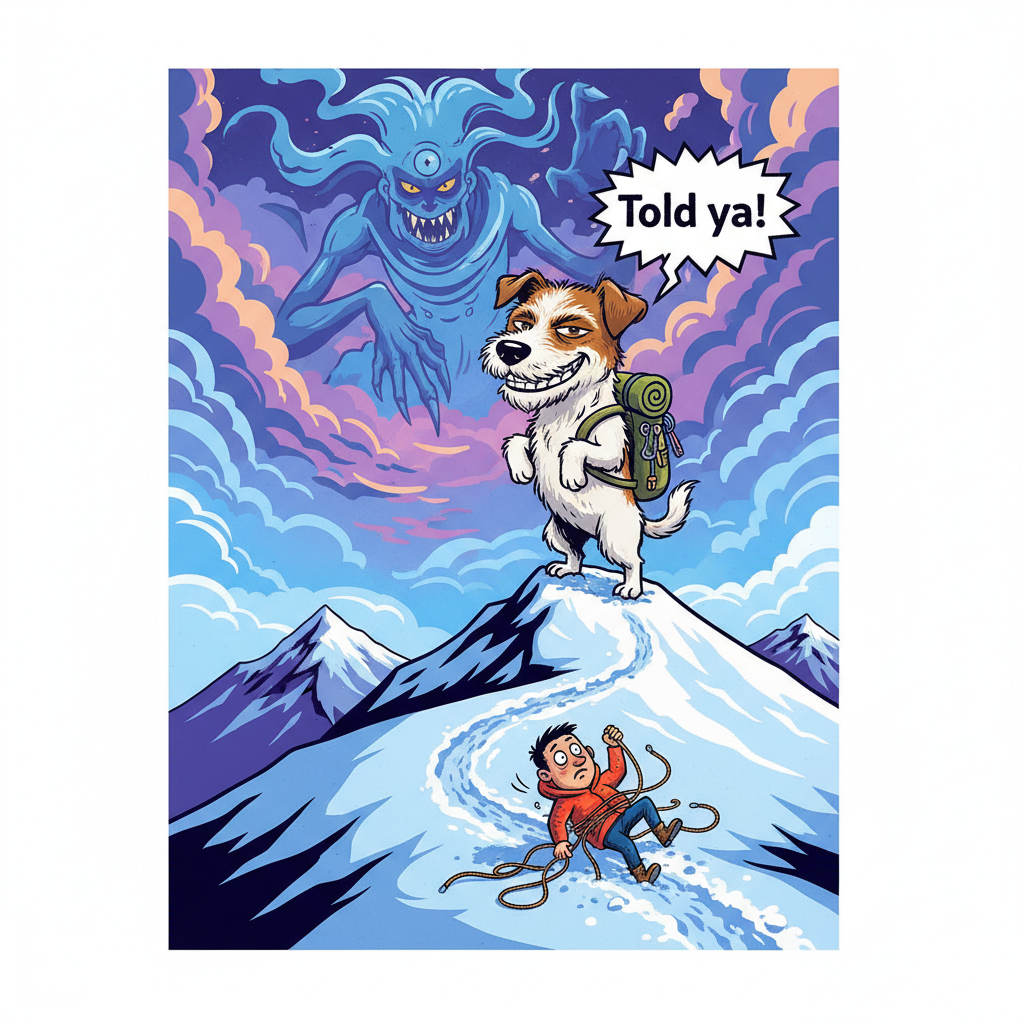
PAGOSA SPRINGS, CO — After a two-month search for 71-year-old Rich Moore and his dog, Finney, in the treacherous San Juan Mountains, only one of them was found alive and well. The 14-year-old Jack Russell terrier, Finney, was discovered near her deceased owner, prompting a re-evaluation of the human-canine partnership dynamic.
“Frankly, this changes everything,” stated Dr. Evelyn Reed, a leading evolutionary biologist from the Institute for Comparative Survival. “For generations, we’ve operated under the assumption that humans provide essential services to dogs: food, shelter, opposable thumbs for opening treat bags. This incident suggests that, in a true wilderness scenario, we might just be glorified, slow-moving obstacles.”
Rescuers noted Finney appeared to be in surprisingly good condition, having reportedly gained a new, steely glint in her eye and an air of quiet self-reliance. “She looked at us like, ‘Took you long enough. Now where’s the good stuff?’” recounted one search and rescue volunteer, who wished to remain anonymous, citing potential existential dread.
Animal behaviorists are now proposing new research into whether dogs actively shed their human companions in adverse conditions to optimize survival. “It’s not malicious, it’s just efficient,” explained Dr. Kenneth Paws, author of 'The Alpha’s Burden.' “Think of it as a natural selection process, but with more slobber and less critical thinking.”
Finney, now a local legend, is reportedly considering a memoir, tentatively titled 'Two Months of Peace and Quiet.'