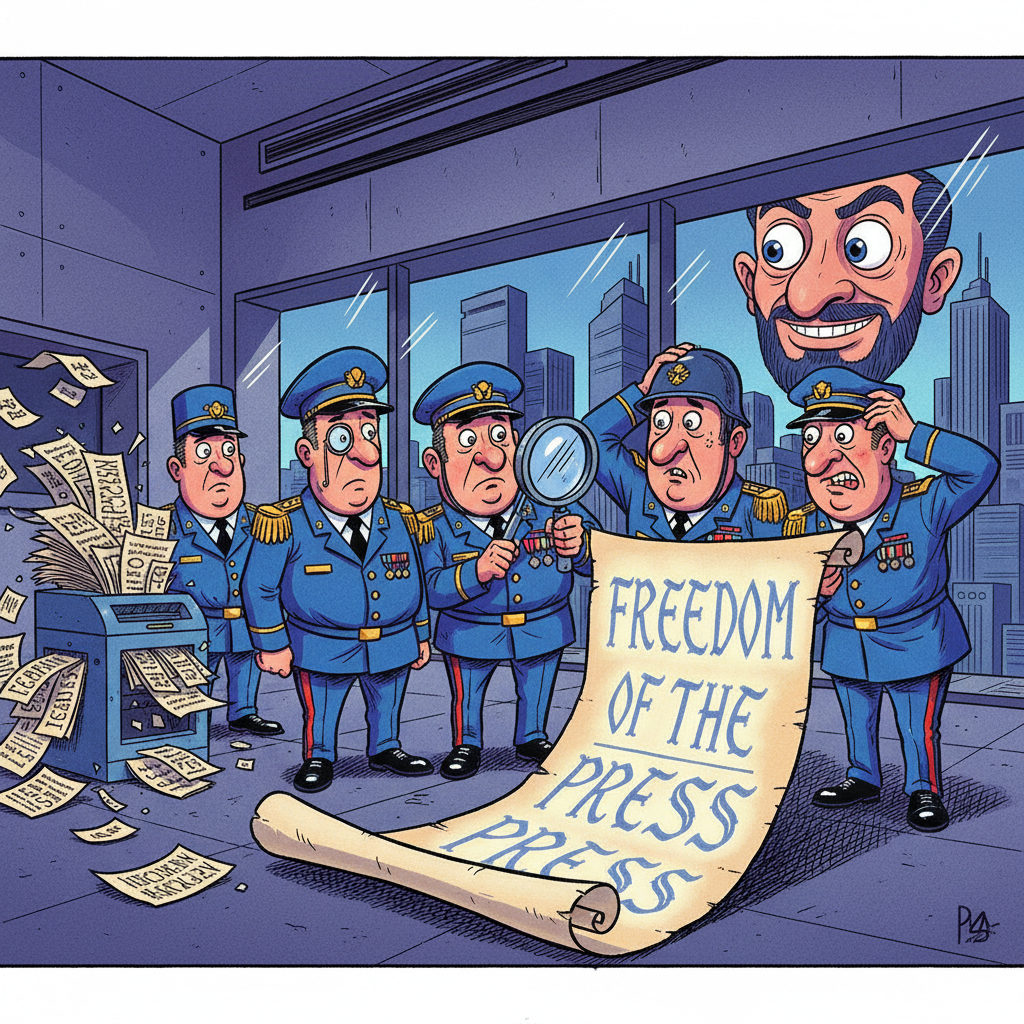
WASHINGTON D.C. – The U.S. Department of Defense is reportedly struggling to comprehend a recent federal court ruling that declared some of its restrictions on news organizations unconstitutional. Sources within the Pentagon indicate a deep-seated confusion regarding the First Amendment's 'freedom of the press' clause, which many believed was merely a suggestion for less sensitive government agencies.
“We’ve always operated under the assumption that 'press freedom' meant we were free to decide what the press was allowed to see,” stated General Buck Thunderfist (Ret.), a newly appointed 'Media Operations Liaison' who requested anonymity. “This idea that they can just… show up and ask questions, and then publish the answers, without our explicit pre-approval and several layers of redaction, it’s frankly quite disruptive to our workflow.”
The ruling, stemming from a lawsuit initiated by The New York Times, has sent shockwaves through the Pentagon's public affairs department, which had meticulously crafted a system of 'guided narratives' and 'pre-approved photo opportunities.' Officials are now reportedly reviewing the Constitution for other clauses that might be similarly misinterpreted.
“Is 'due process' also, like, a real thing?” mused one junior aide, poring over a dog-eared copy of the Bill of Rights. “And 'unreasonable searches and seizures'? Are we just supposed to let people have their stuff?”
Legal experts suggest the Pentagon may need to hire a 'Constitutional Interpretation Consultant' to help navigate these complex and apparently binding legal documents. The department is reportedly considering a new initiative to 'educate' the judiciary on the nuances of national security, starting with a PowerPoint presentation titled 'Why We Can't Have Nice Things (Like Secrecy).'