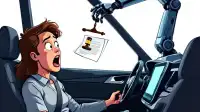
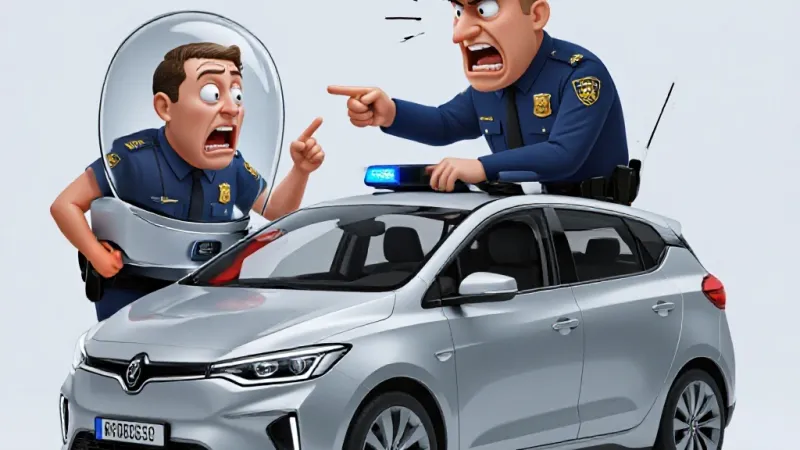
Middlesex, MA — The Middlesex City Council has unanimously approved a novel ordinance mandating that every commercially deployed robotaxi within city limits be assigned a human "designated fall guy" responsible for receiving all traffic citations. The groundbreaking measure, passed late Tuesday night, is designed to close a critical enforcement gap as autonomous vehicle fleets become increasingly common on municipal roadways.
"Look, we tried everything," explained Chief Wallace 'Wally' Jenkins of the Middlesex Police Department during a press briefing Wednesday. "We tried leaving little sticky notes on the lidar sensors. We mailed tickets to 'Legal Department, Self-Driving Division, C/O Google Waymo-Cruise-Optimus Inc.' — they just bounced. At one point, Officer Rodriguez spent three hours trying to explain the concept of 'rolling through a stop sign' to a parked, driverless Chevy Bolt. It was frankly getting embarrassing for our officers. This system, while not perfect, at least gives us a verifiable person to fine when one of these metal boxes decides a bike lane is actually a merge lane." The 'fall guys,' officially designated as "Algorithmic Behavior Receptors," will be required to ride along in a chase vehicle or maintain a 30-second response time to any reported infraction, ready to assume immediate responsibility for the vehicle’s actions. Their training will include a two-day seminar on "Understanding Robotaxi Intent" and "Effective Apology Delivery to Upset Pedestrians."
Sources within the city attorney's office, speaking anonymously, confirmed the new ordinance, officially known as "The Human Accountability for Algorithmic Offenses Act of 2025," was drafted after extensive, unsuccessful negotiations with major robotaxi operators. These companies reportedly declined to accept direct financial liability for "unforeseeable edge-case human-like errors" or to implement "pre-punishment software patches" into their autonomous systems, citing concerns over "impeding technological progress with legacy legal frameworks." "This is not about shifting blame," stated a spokesperson for OmniAuto, a prominent robotaxi provider, in a press release praising the new legislation. "This is about innovative public-private partnerships that accelerate the future of mobility by ensuring swift and clear accountability for any minor operational discrepancies. We believe this pioneering model will help build trust with the community by providing a familiar human face for punitive interactions." OmniAuto announced it would begin hiring for "Operational Compliance Associates" immediately, noting the roles offered "competitive wages for absorbing all consequences, including points on their personal driving record."
Initial projections from the Middlesex Department of Transportation estimate the program will create upwards of 37 new full-time positions by next quarter, though concerns have been raised by local labor unions regarding potential hazard pay and mental health support for individuals expected to shoulder the legal and financial burden of an AI's driving habits. Union President Brenda Harrison of Local 472 of the Public Servants of Automated Systems, which is rapidly forming to represent the new workforce, commented, "Our members are prepared to work, but if I'm getting fined for a computer blowing a red light, I expect more than a pizza party at the end of the month. We're talking about potential criminal records here, not just parking tickets. What happens when a robotaxi causes a multi-car pileup? Does the fall guy get charged with vehicular manslaughter?"
The City Council hopes the program will serve as a national model for how human society can creatively adapt to technology that was designed without human society in mind.