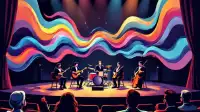
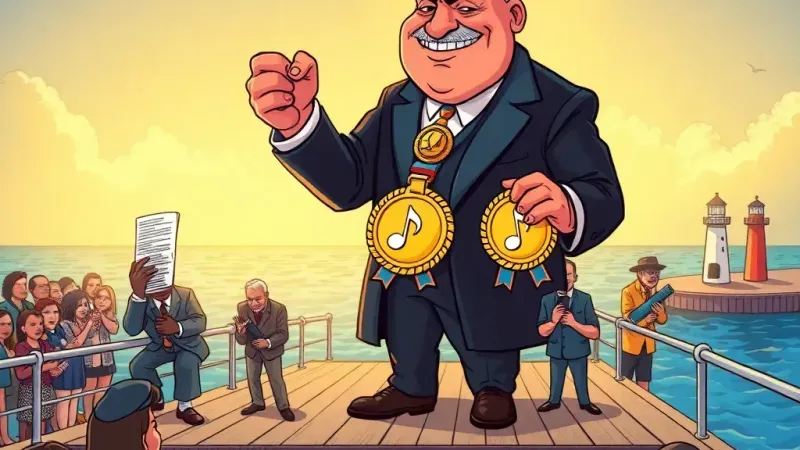
ATLANTIC BEACH, FL – In a move hailed as a monumental recognition of local ingenuity, the city of Atlantic Beach officially honored several citizens this week for their groundbreaking work in pioneering "musical events" within the community. The honorees were lauded for their historic efforts in organizing gatherings where musicians played instruments for an audience, a practice previously considered unimaginable in the area.
Mayor Brenda Cartwright presented commendations at a packed city hall ceremony, emphasizing the courage required to embark on such an untested endeavor. "Before these visionaries, our evenings were filled with the quiet contemplation of the ocean, perhaps the occasional rustling palm," said Mayor Cartwright, clearly moved. "It took true grit to suggest, 'What if we put a person with a guitar on a small stage, and then other people came to listen?' It sounds simple now, but in the late 1990s and early 2000s, it was a concept so groundbreaking it bordered on the unimaginable." She added that initial proposals were met with skepticism, with some residents reportedly fearing a "cacophony of pre-recorded noise" or "unregulated rhythm exposure."
Among those recognized was local entrepreneur Barry 'The Beat' Stevenson, credited with orchestrating the first known "public performance featuring amplified acoustic guitar and cover songs" at a local establishment in 1998. "We just wanted to try something different," Stevenson recalled, misty-eyed. "We didn't know if anyone would show up, or if the very fabric of society would unravel. It was a huge risk, putting sound waves out into the public space like that. We even had to invent the concept of 'intermission' on the fly." Dr. Evelyn Thorne, head of the Atlantic Beach Institute of Early Social Gatherings, lauded the profound impact. "This wasn't just about music; it was about the genesis of collective auditory engagement. They laid the groundwork for everything from karaoke nights to community theater, fundamentally altering the way humans interacted in this specific zip code."
Cultural anthropologist Dr. Quentin Miller, while acknowledging the local impact, offered a slightly more tempered view. "It's true that for a brief period in the late 20th century, some communities genuinely struggled with the logistics of people gathering to listen to sounds. Questions like 'Where should the sound come from?' and 'Do they stand or sit?' were genuine intellectual hurdles for certain demographics," Dr. Miller explained. "But it's important to remember that most of humanity had already sorted this out thousands of years prior, probably around the time someone first hit two rocks together near a fire. Atlantic Beach was just, you know, getting caught up." He noted that similar 'pioneering' efforts were concurrently occurring in various strip malls and community centers nationwide, often spearheaded by individuals with a "basic understanding of acoustics and an empty Tuesday night slot."
Following the success of the music pioneer ceremony, city officials confirmed that research is now underway to identify the pioneers of "group storytelling sessions" and "watching moving images on a large screen outdoors," with similar recognition events expected in the coming years. A permanent historical marker detailing the "Evolution of Shared Sonic Experiences and Subsequent Gatherings" is planned for the city’s main square, featuring an interactive display of early concert flyers and a timeline of the "discovery" of amplified sound. Local businesses are already capitalizing on the new historical narrative, with "Pioneer Pale Ale" and "First Jam Java" now available at beachfront cafes.
The city council is reportedly considering future awards for those who first conceived of "selling beverages at these gatherings" and "charging a small fee for attendance."