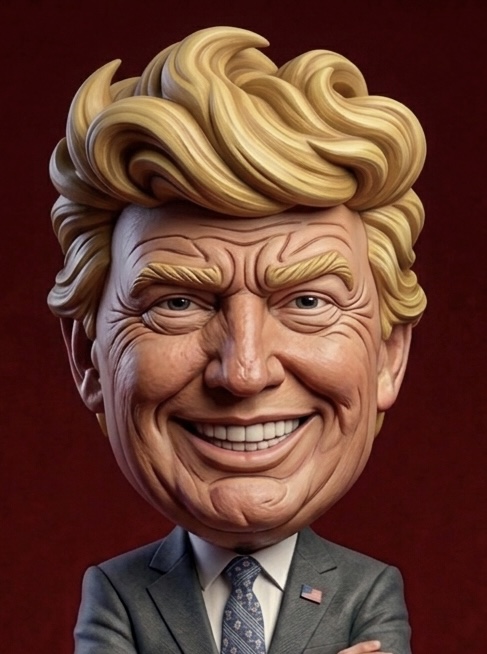
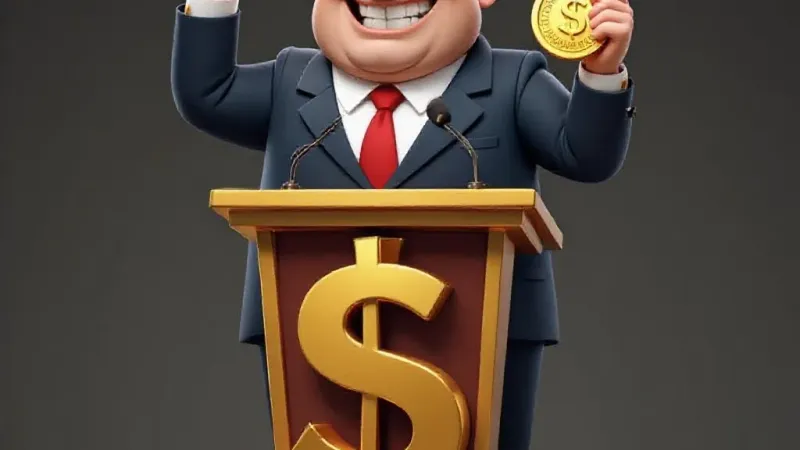
WASHINGTON D.C. — A leading presidential candidate issued an urgent directive today for the Federal Reserve to immediately slash interest rates, declaring the United States must secure the coveted title of "most best" in the global financial arena. The candidate, speaking ahead of a crucial Fed meeting, stated that anything less than the world's absolute lowest interest rate would be a national embarrassment and a direct affront to American exceptionalism.
Sources within the Federal Reserve, speaking anonymously due to the sheer bewilderment, confirmed they are attempting to interpret the new directive. "We usually consider metrics like inflation, employment, and overall economic stability," one official admitted, polishing a very confused-looking monocle. "Now we're being asked to quantify 'most best' and identify the current 'best' country's rate for comparison. Is it a participation trophy? A gold medal? Do we get a parade?" The "Institute for Comparative National Bragging Rights," a newly self-appointed think tank, quickly published an emergency white paper attempting to establish a "Global Interest Rate Leaderboard" based on undisclosed criteria, primarily consisting of "vibes" and "how much other countries are currently laughing at us."
The candidate doubled down on the demand during a campaign rally in Des Moines, clarifying his position: "Look, every country has an interest rate. Ours? It needs to be the lowest. Why? Because we're America! We're number one! Are we going to let Luxembourg have a better interest rate than us? Are we going to let *any* country beat us at interest rates? That's weak. That's for losers. We need to be winning. We need to be so low, other countries will look at us and say, 'Wow, America really is the most best at having low interest rates.'" He then suggested a new national holiday be declared upon achieving this financial milestone.
Financial analysts universally agreed that implementing a policy solely focused on achieving the absolute lowest interest rate, regardless of domestic economic conditions, would likely trigger hyperinflation, devalue the dollar, and send bond markets into a cataclysmic spiral. However, the candidate's campaign spokesperson clarified that these outcomes were "acceptable collateral damage in the pursuit of irrefutable national greatness and proving once and for all that we are indeed 'the bestest.'" The spokesman added that if other nations then raised their rates out of economic necessity, the U.S. could simply lower its rates further, thereby "winning even harder."
The Federal Reserve now faces the unenviable task of balancing its dual mandate of maximum employment and price stability against the nation's newfound, unshakeable desire to win an imaginary global interest rate competition, even if it means destroying the economy to claim the trophy.