WASHINGTON D.C. — In a stunning reversal of expectations, a new legislative proposal circulating in statehouses across the nation would compel political campaigns to explicitly state if their advertisements were crafted by a human being. The move comes amidst growing concerns that voters are increasingly unable to distinguish between genuine human-penned rhetoric and sophisticated AI-generated content.
“For too long, the American public has been subjected to the insidious practice of human-crafted political messaging without their full knowledge,” stated Senator Mildred Finch (D-PA), a proponent of the bill. “Our constituents deserve to know when the words they’re reading or hearing come from a person with emotions, biases, and a mortgage, rather than a dispassionate neural network trained on 50 years of campaign slogans.”
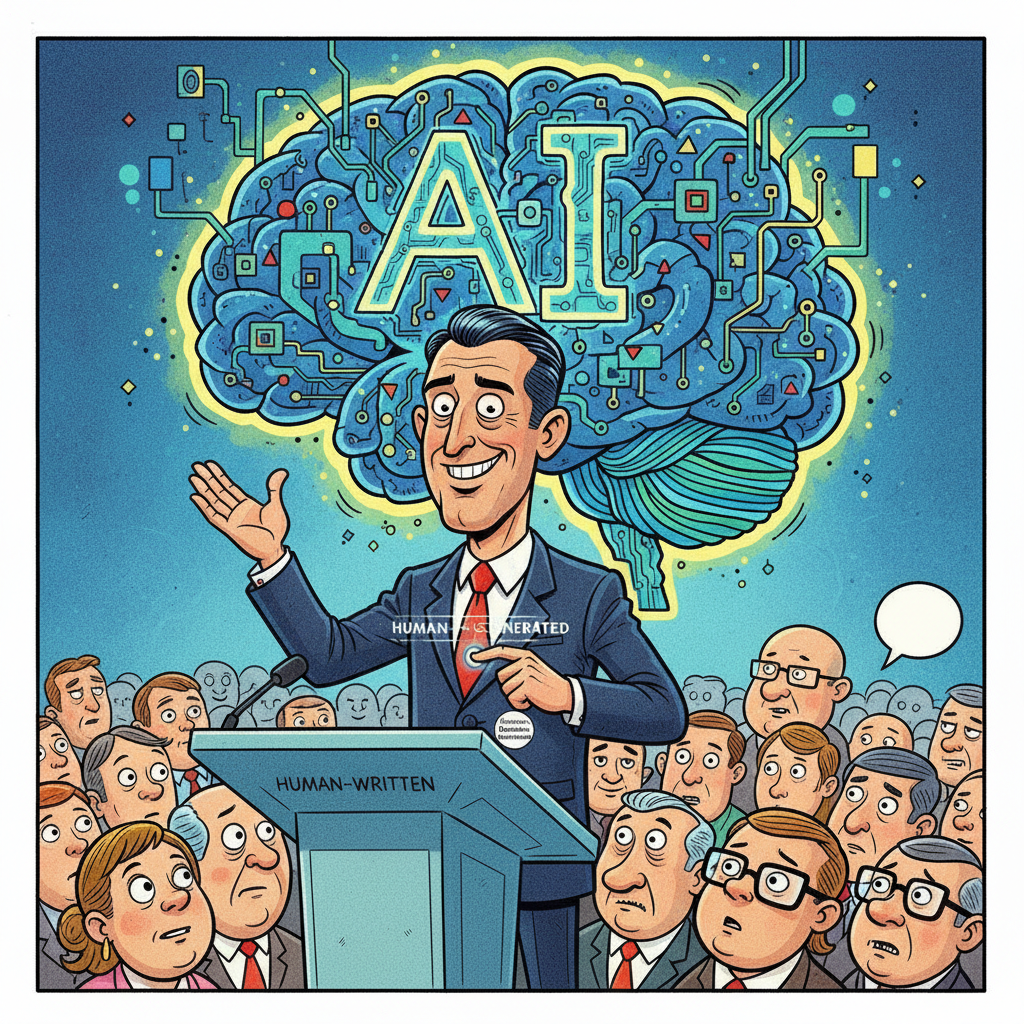
The proposed legislation, tentatively titled the 'Authentic Human Political Disclosure Act,' would require a prominent disclaimer on all campaign materials, reading: 'THIS MESSAGE WAS WRITTEN BY A HUMAN BEING.' Critics argue the mandate is an unnecessary burden on campaigns, while supporters insist it’s a crucial step towards electoral integrity.
“It’s about transparency,” explained political strategist Dr. Eleanor Vance. “Voters have a right to know if that heartfelt appeal to their values was composed by a campaign intern fueled by cold brew and existential dread, or by an algorithm designed to maximize engagement metrics. The difference is subtle, but profound.”
Opponents of the bill have raised concerns about the practicalities of enforcement, questioning how one would definitively prove a message originated from a human. “Are we going to conduct Turing tests on every campaign manager?” quipped one anonymous staffer. “Most of them barely pass as human on a good day.”
If passed, the law could usher in a new era of political advertising, where the mere presence of a human touch becomes a unique selling proposition, rather than the default expectation. Campaigns are reportedly already drafting ads touting their '100% Organic, Free-Range Human Content.'